| Basic Research | https://doi.org/10.21041/ra.v14i1.663 |
Determination of concrete strength and stiffness after fire simulation through multiple regression models between wave propagation and temperature
Determinación de la resistencia y rigidez del hormigón tras la simulación de un incendio mediante modelos de regresión múltiple entre la propagación de las ondas y la temperatura
Determinação da resistência e rigidez de concreto após simulação de incêndio através de modelos de regressão múltiplos entre propagação de ondas e temperatura
R. R. C. Silva1*  , Y. B. Gomes2
1 Laboratory of Nondestructive Testing - University of Campinas, Campinas/SP, Brasil.
2 Laboratory Civil Construction Materials Laboratory, University Nove de Julho, São Paulo/SP, Brasil.
*Contact author: rodrigorogeriodoutorado@gmail.com
Received: 30/01/2023
Revised: 23/11/2023
Accepted: 11/12/2023
Published: 01/01/2024
| Cite as: Silva, R. R. C., Gomes, Y. B. (2023), "Determination of concrete strength and stiffness after fire simulation through multiple regression models between wave propagation and temperature”, Revista ALCONPAT, 14 (1), pp. 40 - 56, DOI: https://doi.org/10.21041/ra.v14i1.663 |
Abstract
The aim of this research was to evaluate the behaviour of the physical, mechanical and elastic parameters of concretes made with different water/cement ratios, subjected to different temperature levels, using ultrasonic wave propagation. After exposure to high temperatures, cylindrical and prismatic concrete samples were subjected to slow and abrupt cooling, demonstrating the influence of the type of cooling on compressive strength, modulus of elasticity, mass loss and wave propagation speed. Statistically significant multiple regression models were developed at the 95% confidence level as predictors of concrete strength and stiffness through the velocities obtained by ultrasound testing, enabling the integrity of structures to be monitored and verified after fire situations.
Keywords: high temperatures; concrete; ultrasonic wave propagation; strength and stiffness.
1. INTRODUCTION
One of the main concerns of civil engineering is related to changes in the strength and deformation properties of concrete structural elements when subjected to high-temperature fire situations. Post-action structural knowledge of high temperatures in concrete is a challenge in academic circles, given the cooling speeds. According to Moreno and Souza (2010), fighting a fire represents the action of sudden cooling, causing a reduction in resistance due to variations in the temperature gradients that originate in the concrete. Growing technological advances in recent decades have brought new technologies to the construction sector, especially tests using ultrasonic waves, allowing concrete structures to be assessed without the need to extract specimens from the structures to analyse mechanical and elastic parameters.
The Brazilian standards ABNT-NBR 8802 (2019), European BS 1881:203 (1986), ACI 228 (2003) and EN 12504 (2004), propose that correlations between ultrasound wave propagation speed and concrete strength should be used after calibration for a given mix and/or component characteristics, such as the proportion of aggregates, water-cement ratio. However, ultrasound test results are indirect measurement parameters and should be interpreted as indicative of behaviour, but in decision-making situations they should be accompanied by destructive tests that determine the real properties being assessed. According to Estacechen (2020), the method of assessing the compressive strength of concrete through the moulding and breaking of specimens remains the most reliable assessment system, followed by cores, which demonstrate better safety parameters in a real assessment of the structure, in the case of structures that have already been built.
Ultrasound testing helps to classify and characterise concrete, but it is also used to detect internal flaws and concrete thickness (Ohdaira and Masuzawa, 2000; Sutan and Meganathan, 2003). Researchers have used ultrasound testing to create correlation models to predict the relationship between ultrasound wave propagation and other physical-mechanical characteristics. However, care must be taken when using correlation curves, as there are several factors that can interfere with the results, such as strength (Silva, 2020), modulus of elasticity (Trtnik et al., 2008; Yıldrım and Şengul, 2011), density (Mohammed and Hasan, 2016), porosity (Lafhaj et al., 2006) and permeability (Panzera et al., 2008). In addition, the properties of the water-cement ratio (Ye et al., 2011; Silva, 2020), aggregate size (Berriman et al., 2005), hydration process (Zhang, et al., 2009), and curing conditions chamber et al. (2019). In addition to the state of stress that affects the speed of propagation of ultrasonic waves, this phenomenon is called acoustoelasticity (Lillamand et al., 2010). Temperature has a great influence on the propagation speed of ultrasonic waves in concrete, but this effect seems to be insignificant for temperatures in the 10 to 30°C range, according to DIN EN 12504 (2004). Experimental studies carried out on concrete samples with different water-cement ratios, subjected to high temperatures ranging from 400 to 600°C (Gyu-Yong et al.; 2009); 400 to 600°C (Yang et al, 2009); 100 to 400 °C (Ozawa et al., 2014); -18 to 180°C (Güneyli et al., 2017), 100 to 700°C (Hwang et al., 2018), found a decrease in the ultrasonic pulse velocity of concrete, as well as compressive strength and modulus of elasticity, after cooling in samples subjected to temperatures above 300°C. It is possible to monitor internal defects in concrete because there is a correlation between the increase in cracks caused by expansion at high temperatures and the decrease in ultrasound wave propagation. Eurocode 2 (2004) and ABNT - NBR 15200 (2012) present models that determine the characteristic compressive strength of concrete and the modulus of elasticity, according to the increase in temperature, through indicative values of the reduction factor of the characteristic strength (kc,ϴ) and reduction of the modulus of elasticity (kcE,θ). In the scientific literature, studies evaluating the mechanical and elastic parameters of concrete using ultrasound testing for different temperature levels and types of cooling (slow and abrupt) use direct testing, which is considered the most suitable for correlating the material's mechanical properties with the speed of wave propagation. However, the assessment of post-fire structures almost never has access to the ends of the part under inspection, making it necessary to carry out an indirect test. In view of the above, the general aim of the research was to obtain multiple regression models between different temperature levels and types of cooling, associated with the parameters obtained by ultrasound testing using the direct and indirect methods, to determine the estimated strength and stiffness of concrete, enabling the monitoring and assessment of the integrity of structures after fire situations.
2. EXPERIMENTAL PROGRAM
2.1 Fine and coarse aggregate
The fine aggregate chosen was natural quartz sand extracted from the river. The characterisation of the fine aggregates was carried out in accordance with the recommendations of the ABNT - NBR standards for fine aggregates (NM 248, 2003; NM 52, 2009; NM 45, 2006; NM 46, 2003), and the results were as shown in Table 1. The coarse aggregate used is of granite origin, extracted from the state of São Paulo, characterised according to ABNT-NBR (NM 248, 2003; NM 53, 2002; NM 45, 2006), specific according to table (1), classifying the coarse aggregate as gravel 1.
Table 1. Results of the physical characterisation of fine and coarse aggregates.
| Aggregate | Specific Mass (kg/m3) |
Unit mass (kg/m3 |
Maximum diameter (mm) |
Fineness modulus |
| Sand | 2650 | 1410 | 2,4 | 2,25 |
| Granite | 2690 | 1500 | 12,5 | 5,80 |
2.2 Preparation of samples
The methodology used to test the concrete samples during the 28 day period, subjected to different temperatures, followed the same methodology according to the literature found in the works by Wendt (2006), Forigo (2017) and Hwang et al. (2018), to which they attribute credibility to the methodology proposed in the tests.
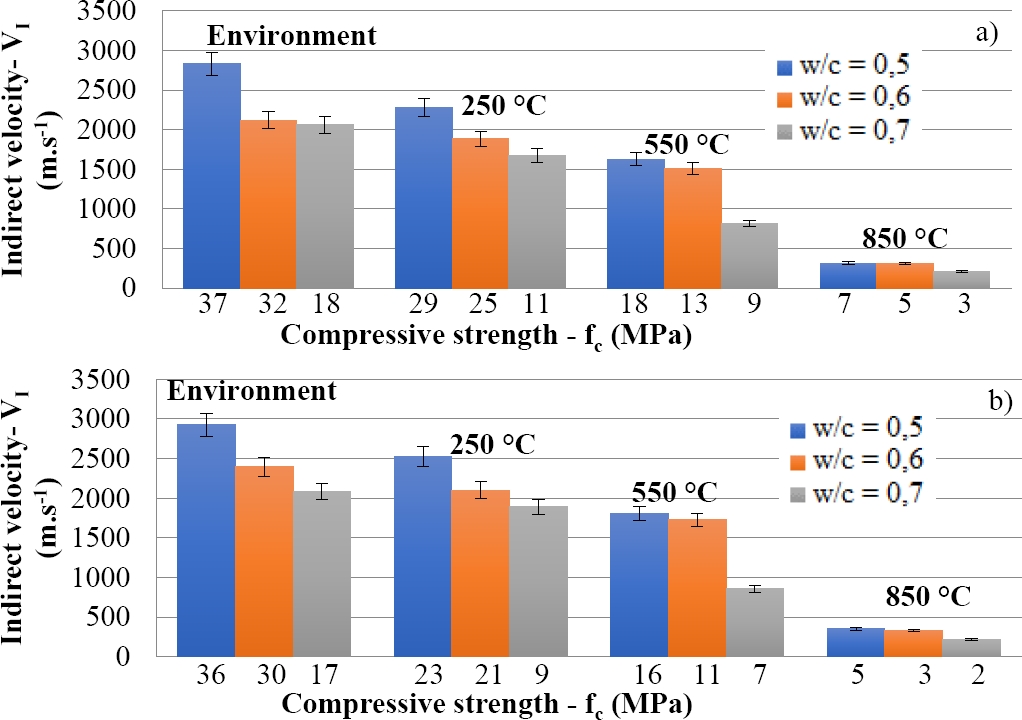
The mix used was (1:2.3:2.5) with cement consumption of 380 Kg/m³. During the preparation of the mixes, only the water/cement ratio was varied in the following proportions (0.5; 0.6 and 0.7) to obtain different compressive strengths of the concrete at 28 days. The average densities of the concrete produced with the different aggregates decreased as the water-cement factor increased, as expected (Table 2). Also as expected, there was an increase in slump (NM 67, 1998) as the water-cement factor increased (Table 2). Despite the variations, the values for all densities are within the limits considered normal for concrete, from 2000 kg.m-3 to 2800 kg.m-3, according to the Brazilian standard (ABNT-NBR 9778, 2015) and the literature (Silva, et al., 2020). The sample for each w/c ratio consisted of 48 cylindrical specimens (100 x 200 mm) made in accordance with ABNT-NBR 5738 (2003) and 16 prismatic specimens (200 x 200 x 400) mm, using CPII-F-32 cement, commonly used in construction. The experimental programme totalled 144 cylindrical and 48 prismatic specimens. By varying the sampling in relation to the water cement factor (w/c), it will be possible to check the performance of concrete subjected to room temperature and high temperatures (250°C, 550°C and 850°C). The specimens were demoulded 24 hours after concreting and submerged in water and lime for 28 days. After the curing period, the specimens were placed at room temperature, then at high temperatures.
Table 2. Slump values and average density of concrete samples.
| Ratio (w/c) |
Slump (mm) |
Average density (kg.m-³) |
| 0,5 | 70 | 2295 |
| 0,6 | 110 | 2231 |
| 0,7 | 200 | 2145 |
2.3 High temperature tests
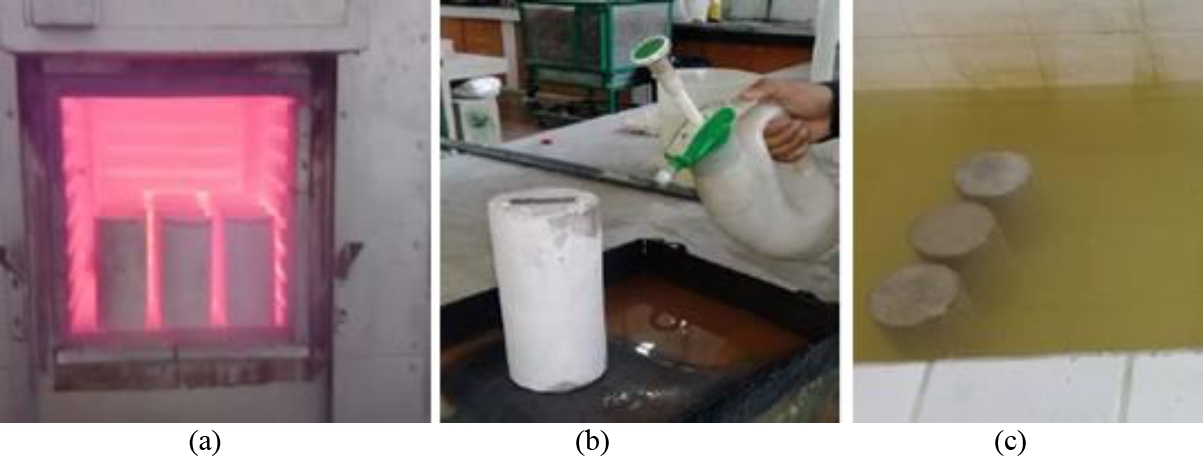
For each water/cement factor (0.5, 0.6 and 0.7), 12 cylindrical and 4 prismatic specimens were subjected to temperatures of specifically 25°C (room temperature), 250°C, 550°C and 850°C in an industrial electric muffle furnace (Figure 1a). The samples were weighed before and after being subjected to the high temperatures to assess mass loss. The test methodology took into account the recommendations of the RILEM standards for heating concrete, specifically RILEM TC 129-MHT (2004)
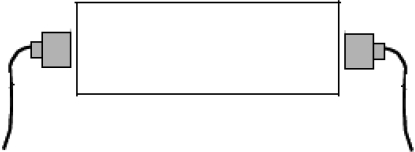
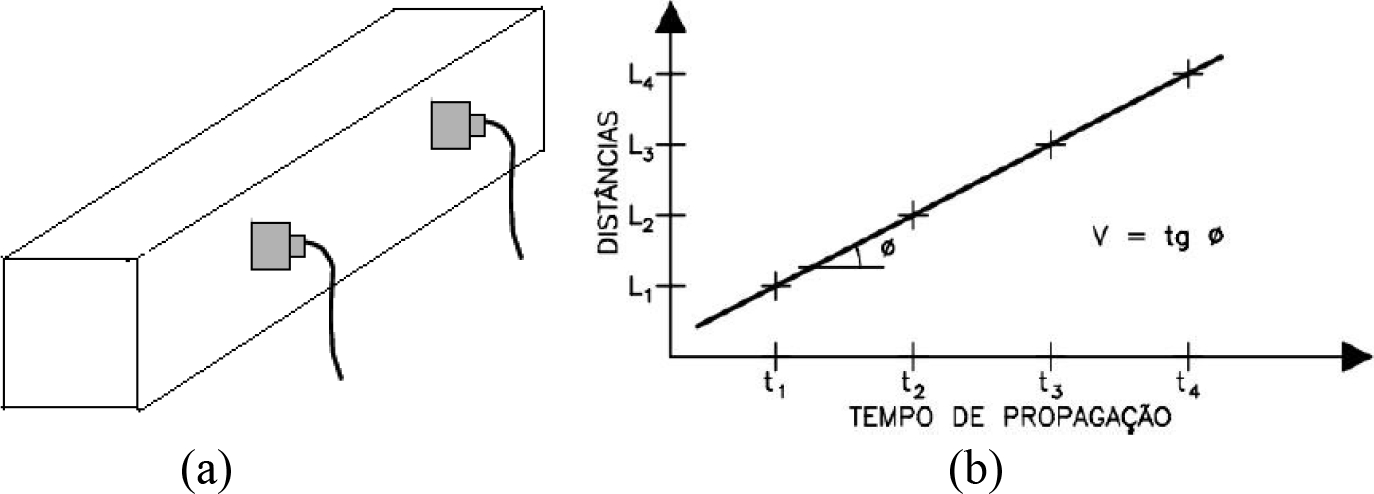
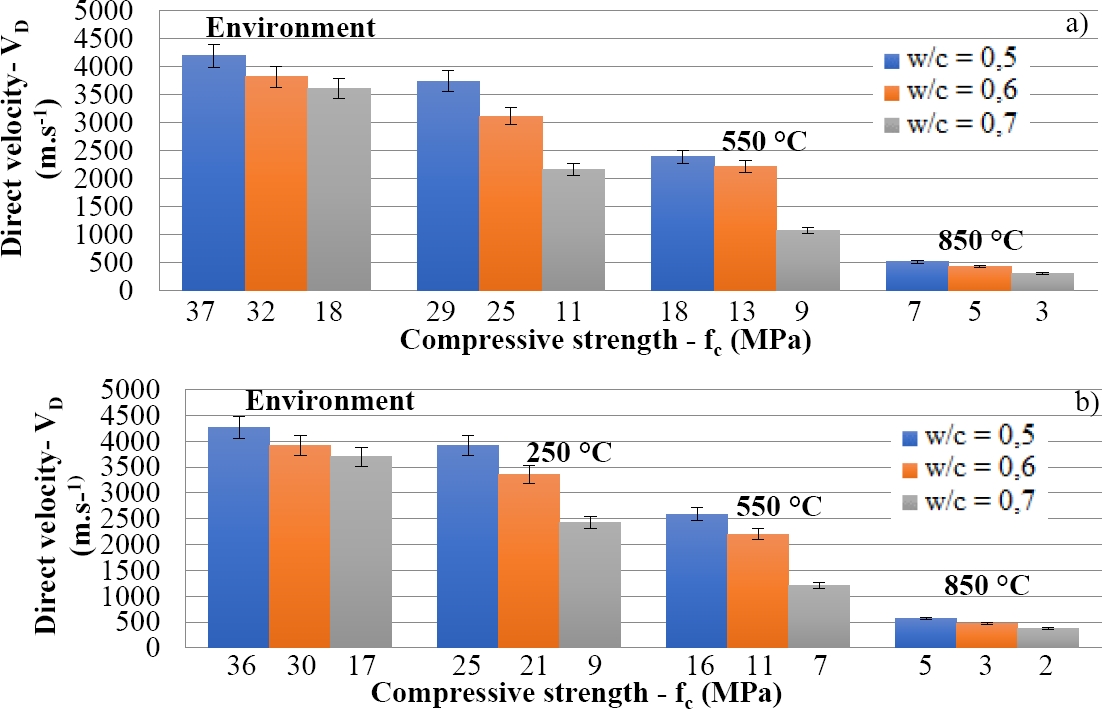
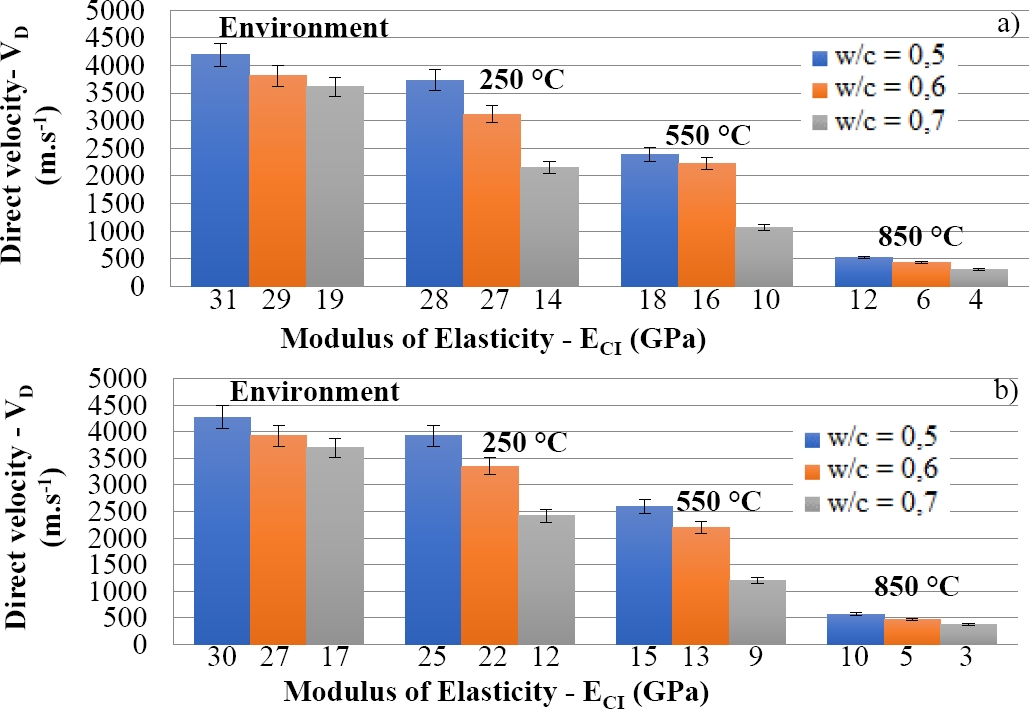
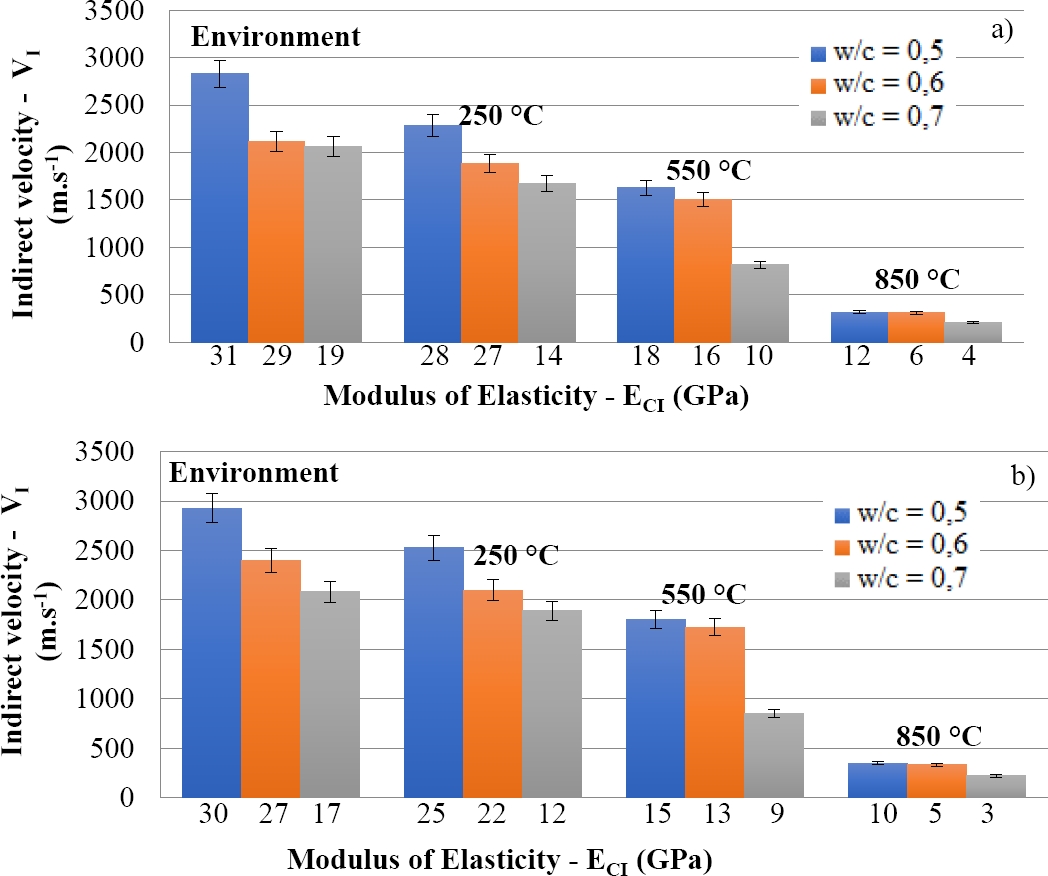
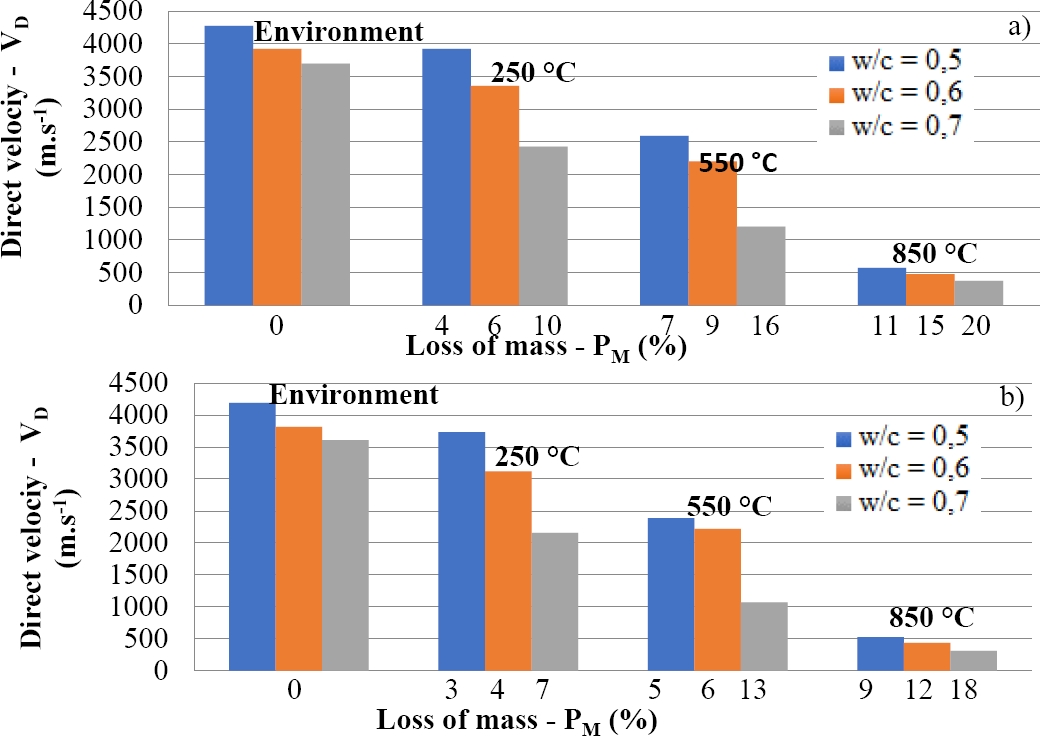
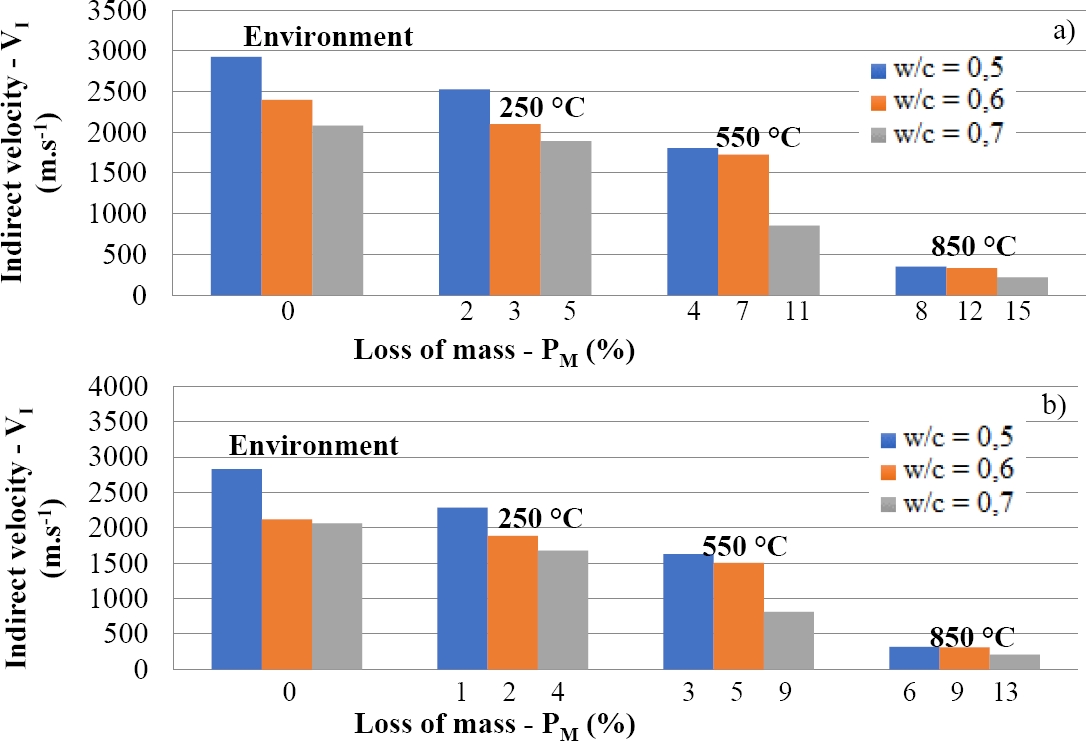
and RILEM TC 200-HTC (2007), which recommend a heating rate of up to 4°C/min. The time taken to reach each temperature studied (250°C, 550°C and 850°C) was approximately (45 min.; 1:30 min. and 2:15 min.). After reaching the desired temperature, the samples were kept in the oven for a further 60 min. so that the temperature was homogenised inside the piece. The cooling of the specimens after the temperature homogenisation process was carried out in two ways in two batches. For batch 1, half of the cylindrical and prismatic samples were subjected to slow cooling, exposed to room temperature for around 3 to 4 hours, after which 200 ml of water was sprayed onto the samples (Figure 1b). After exposure to a certain constant temperature, the other half of the samples considered to be batch 2 were cooled abruptly and placed in a container of water at room temperature for 60 minutes, after which they were removed and exposed to room temperature and humidity (Figure 1c). Figure 1. (a) concrete samples in a muffle furnace, (b) slow cooling with pulverised concrete, (c) sudden cooling in a container of water. Authors (2023). 2.3 Non-destructive ultrasound testing After slow and abrupt cooling, the cylindrical and prismatic samples were subjected to the wave propagation test using ultrasound equipment (Pundit model), with the aid of longitudinal transducers with flat faces and a frequency of 54 KHz. Before carrying out the tests, the equipment was calibrated using an acrylic material with a known speed. The cylindrical samples were tested using the direct method (Figure 2), where from the ultrasound tests it was possible to obtain the wave propagation times (t) and thus calculate, for each distance between transducers (L), the propagation speed of the ultrasound waves (V), using the equation proposed by ABNT-NBR 8802 (2013), according to equation (1). Where: V = wave propagation speed (m.s-1); L= length of the specimen (m), T = time (s). Figure 2. Direct test carried out on concrete cylinder specimens. The indirect wave propagation method was used for the prismatic samples (Figure 3a), using the calculation proposed by the ABNT-NBR 8802 (2019) standard as a methodology, according to equation (2). The Brazilian standard proposes a way of calculating the speed of ultrasonic propagation by the indirect transmission mode, whose procedure consists of calculating the speed using a graph of propagation time versus distance between transducers (Figure 3b). The indirect speeds were obtained from the averages on three measurement lines (top, middle and bottom of the prismatic sample). Figure 3. (a) Indirect test carried out on prismatic samples. (b) Determination of the speed of propagation by the indirect method. Source: ABNT-NBR 8802 (2019). 2.3 Destructive testing After the ultrasound test, the cylindrical samples were subjected to the compressive strength test (fc) carried out on a hydraulic machine, calculated in accordance with the standard (ABNT-NBR 5739, 2018) according to equation (3). The specimens were instrumented with strain gauges with a resolution of 0.01 mm to determine the modulus of elasticity (Eci) calculated in accordance with the Brazilian standard (ABNT-NBR 8522, 2017) according to equation (4). Where: fc = compressive strength of the specimen (MPa); F = maximum force achieved (N); D = diameter of the specimen (mm); L= length of the specimen (mm); Eci = modulus of elasticity; σb = stress (MPa) obtained at 30 per cent of the compressive strength; 0.5 = value of the initial reference stress (MPa); εb and εa = specific deformations of the concrete corresponding to the stress of 30 per cent of the compressive strength and under the initial reference stress. 2.3 Physical tests After the cylindrical and prismatic samples were subjected to the different temperature levels and types of cooling (slow and abrupt), the mass loss (Pm) for each type of sample was checked according to equation (5) by weighing them on a precision balance with a resolution of 0.1 g. Where: Pm = Loss of mass (%); m = mass of the sample at room temperature (kg); (%); mtemp = mass of the sample subjected to a certain temperature (kg). 3. RESULTS AND DISCUSSIONS Using statistical software, it was possible to analyse the frequency distribution of the parameters obtained from the ultrasound test (direct and indirect propagation speed) and from the simple compression test with deformation measurements (strength and modulus of elasticity). The aim of the statistical analysis was to analyse the normality of the parameters obtained in the destructive and non-destructive tests for the different w/c ratios, allowing them to be used to apply statistical correlations. Normality was assessed by the limits of asymmetry and kurtosis, between -2 and + 2. The results obtained in the compression tests, modulus of elasticity, wave propagation velocity obtained by the direct and indirect methods on the samples were statistically evaluated by analysis of variance (ANOVA). The statistical analyses were carried out by comparing means in order to verify the existence of a difference between the values of the parameters obtained, with emphasis on the variables of temperature increase, resistance class and cooling method, considering a 95% confidence level. The direct velocity (VD) and indirect velocity (VI) values for the different temperature levels (T) were then correlated with the parameters obtained by the destructive compression method (fc) and (Eci). 3.1 Effect of temperature on the resistance, rigidity and propagation of ultrasound waves The variation in the properties of concrete exposed to high temperatures depends on many factors, such as constituent materials, initial strength, age, water-cement factor and type of cooling. These factors make it difficult to develop an accurate model for predicting mechanical and elastic parameters. However, when concrete is exposed to temperature increases of 550ºC and 850ºC, there is a significant reduction in compressive strength regardless of the variation in water-cement factor and cooling type. The modulus of elasticity shows the same downward trend as the compressive strength, but regardless of the type of cooling and water-cement factor, the decrease in stiffness is less abrupt than the strength, especially in relation to the temperature at 550ºC and 850ºC. The results show that losses in concrete compressive strength occur gradually, but there is a general tendency for the strength to decrease in relation to room temperature (50%) for the 550ºC temperature, and for samples subjected to the 850ºC temperature (88 to 91%). Slow cooling made a better contribution to the strength parameters (fc), with higher values of around 10 to 15 per cent for the 250˚C and 550˚C temperatures, and 23 per cent for the 850˚C temperature, compared to sudden cooling. With regard to stiffness (Eci), the slowly cooled samples showed an increase of around 12% for all temperatures compared to the sudden cooling. Studies carried out by Moreno and Souza (2010) also evaluated the type of cooling in concrete specimens, and the results also indicated a greater loss of strength (fc) and stiffness (Eci) for abruptly cooled concrete samples. According to Yuzer et al. (2004), the decrease in mechanical and elastic parameters after sudden cooling is related to the increase in volume due to the rehydration of calcium oxide (Cao), generating cracks, increased porosity and disintegration of the concrete. The reduction in compressive strength, modulus of elasticity and wave propagation speed found in figures (4 to 7) is attributed to damage caused by chips during heating. According to Kirchhof et al. (2015) this behaviour is due to the rapid increase in temperature causing significant changes in the porosity and permeability of the concrete due to the release of water, dehydration of the calcium silicate hydrate (C-S-H) and probably the formation of macro- and micro-cracks. Figure 4. Average values (a) slow cooling, (b) sudden cooling. For samples tested for compressive strength and direct velocity in cylindrical samples, after different temperature steps. Authors (2023). Figure 5. Average values (a) slow cooling, (b) sudden cooling. For cylindrical specimens tested for compressive strength and indirect velocity in prismatic specimens, after different temperature steps. Authors (2023). Figure 6. Average values (a) slow cooling, (b) sudden cooling. For cylindrical specimens tested by modulus of elasticity and direct velocity in cylindrical specimens, after different temperature steps. Authors (2023). Figure 7. Average values (a) slow cooling, (b) sudden cooling. For cylindrical specimens tested by modulus of elasticity and indirect velocity on prismatic specimens, after different temperature steps. Authors (2023). The increase in porosity caused by the dehydration of hydrated calcium silicate (C-S-H) can be represented by the results of mass loss and direct and indirect wave propagation velocity (Figures 8 and 9), since any imperfections in the concrete, such as cracks or voids, contribute to the increase in wave propagation time through the length of the specimen, resulting in lower ultrasonic pulse velocities. Mass loss occurs significantly in samples with a water-cement factor (0.5 and 0.6) at temperatures of 550˚C and 850˚C, and from 250˚C onwards with a water-cement factor (0.7). According to Kirchhof et al. (2015) and Viana (2017) for temperatures above 400 ˚C, the increase in free water in the pores of the concrete leads to the phenomenon of explosive spalling and greater loss of mass. Figure 8. Average values (a) slow cooling, (b) sudden cooling. For samples tested by direct speed and mass loss in cylindrical samples, after different temperature steps. Authors (2023). Figure 9. Average values (a) slow cooling, (b) sudden cooling. For samples tested by indirect speed and mass loss in prismatic samples, after different temperature levels. Source: Authors (2023). The direct and indirect velocities for the samples with water-cement factors (0.5 and 0.6) did not show large reductions for the 250˚C ambient temperature, with a variation of (8 to 12%) for slow cooling and (13 to 19%) for sudden cooling. From the temperatures of 550˚C and 850˚C, it is possible to see a marked reduction in the speed of wave propagation for both types of cooling. However, the direct and indirect velocity variations were higher from 250˚C onwards for the water-cement factor (0.7), due to greater evaporation of water inside the concrete, resulting in greater loss of mass, regardless of the type of cooling. The values found among the indirect velocities were (30 to 37%), for the different water-cement factors and temperature levels. According to Silva (2020), the ultrasonic velocities obtained from indirect measurements are lower than the velocity obtained from direct measurements, due to the measurement being carried out close to the surface of the concrete, which generally has a different composition to the internal concrete. Although slow cooling contributed to the strength (fc) and stiffness (Eci), this did not affect the speed of wave propagation in both methods (direct and indirect). Despite the low rate of change, the speeds were higher in the range of 5 to 16% for the different temperature levels in concrete samples subjected to sudden cooling. According to Zhang, et al. (2009) one of the biggest factors affecting ultrasonic velocity is the presence of moisture, so abruptly cooled concrete samples absorb more water, reducing the porosity caused during water evaporation, contributing to increased wave propagation. 3.1 Statistical analysis of non-destructive and destructive tests The parameters obtained in the non-destructive ultrasound tests, direct velocity (VD) and indirect velocity (VI), and in the destructive static compression tests, such as compressive strength (fc) and modulus of elasticity (Eci), for concretes produced with different water-cement factors and temperatures, showed a frequency distribution compatible with normal, verified by the asymmetry and kurtosis within the range -2.0 and +2.0, as shown in table (3). Table 3. Minimum, maximum and average values, asymmetry and kurtosis for the direct (VD) and indirect (VI) velocity of ultrasound wave propagation, strength (fc) and initial modulus of elasticity (Eci) obtained in compression tests, for the traces produced with different water-cement ratios and temperature levels. The speeds obtained are compatible with the results of scientific studies that subjected concrete to the same temperature levels (Yang et al., 2009; Ozawa et al., 2014, Güneyli et al., 2017; Hwang et al., 2018), demonstrating that the methodology applied (temperature levels-ultrasound test-destructive test) was properly applied. Some authors (Wendt, 2006; Forigo, 2017; Hwang et al., 2018) propose using the propagation speed of ultrasound waves obtained in the direct test to infer the quality, strength and stiffness of concrete subjected to different temperature levels. However, these same authors do not consider that post-fire structures do not always have access to the ends of the piece, and that the indirect method is ideal for assessing structures. Therefore, a scientific contribution of this research is the creation of models for determining strength and stiffness, with ultrasound velocity obtained by the direct and indirect method associated with knowledge of the temperature in the structure. Turgut and Kucuk (2006) and Savaliya et al. (2014) concluded that the indirect method is the most accurate for detecting pathologies, demonstrating that the direct test has greater sensitivity for detecting defects, but does not enable them to be located, while the indirect test allows the defect to be better located after it has been detected. Through frequency distribution analysis (Table 4), it was possible to obtain multiple regression models between wave propagation speed and temperature (Tables 4 and 5), contributing to the literature with the models proposed by Eurocode 2 (2004) and ABNT - NBR 15200 (2012), in inferring the strength (fc) and stiffness (Eci) of concrete subjected to high temperatures and types of cooling. Table 4. Correlation between destructive tests combined with wave propagation speed and temperature, for slow cooling. Table 5. Correlation between destructive tests combined with wave propagation speed and temperature, for quenching. All the regression models were statistically significant at a significance level of 95% (P-value < 0.05) - Tables (6) and (7), with correlation coefficients higher than 95% for slow cooling and 90% for abrupt type, indicating that both models can be used to infer the strength and stiffness of concrete, for different temperatures when they present a maximum peak of 850˚C. The values of the correlation coefficients (R²) obtained fall within the variation ranges of the quantities involved in the models proposed by researchers such as Wendt (2006), Forigo, (2017) and Hwang et al. (2018), using similar characteristics and methodology of the samples under study such as the size of the coarse aggregates, cylindrical specimens and variations in the w/c ratio. Although the expressions are not the same, there are no discrepancies in behavior based on the R2 values found in the multiple regression models compared to the simple regression models found in the literature. Thus, the multiple regression models used to infer (fc) and (Eci), with the quantities measured in the ultrasonic wave propagation tests (VD and VI) for different levels and temperature (T), for concretes with compressive strengths between 2 and 35 MPa. 4. CONCLUSIONS Through the tests carried out to analyze the relationship between wave propagation with concrete compressive strength and modulus of elasticity for concretes made with different water/cement ratios (0.5, 0.6 and 0.7) subjected to different temperature levels (ambient, 250°C, 550°C and 850°C), it was possible to conclude that: For samples with a water-cement factor (0.7) the changes in the physical (Pm), mechanical (fc), stiffness (Eci) and acoustic (VD and VI) parameters occur for temperatures above 250°C, and for the water-cement factor (0.5 and 0.6) above 550°C. The loss of mass of cylindrical and prismatic samples is greater for samples subjected to a temperature of 850°C, due to the total evaporation of interstitial water from the concrete, and greater spalling. Slow cooling has a greater influence on mechanical parameters (fc) and stiffness (Eci), while sudden cooling contributes to an increase in acoustic parameters (VD and VI), due to the absorption of water in the concrete samples at temperatures (250°C, 550°C and 850°C), reducing voids and contributing to wave propagation. Through the wave propagation speed obtained by direct and indirect methods, it is possible to detect the presence of pathologies for concrete exposed to temperatures above 250°C. The multiple regression models, without distinguishing the water-cement ratio, were statistically significant (P-value < 0.05) at a 95% confidence level, with coefficients of determination (R²) greater than 90%, allowing the prediction of strength (fc) and stiffness (Eci), through the speed of direct and indirect wave propagation associated with temperature, to monitor and assess the integrity of structures after fire situations. The ultrasound test is a preliminary assessment tool for detecting pathologies in structures, as well as their structural resistance, which should be followed by complementary tests using destructive methods to validate its diagnosis. The results presented are indicative of the behavior of the concrete material on a laboratory scale, but cannot be extrapolated in a simple and direct way to the behavior of real reinforced concrete structures in a fire situation, which may show completely different behavior from that obtained in the laboratory during a fire. 5. ACKNOWLEDGEMENTS The authors would like to thank the Brazilian Portland Cement Association (ABCP) of São Paulo for supporting the research group, which provided the facilities and infrastructure used in this research. 6. REFERENCES American Concrete Institute (2013). ACI 228. 2R. Report On Nondestructive Test Methods For Evaluation Of Concrete In Structures, Detroit. Associação Brasileira de Normas Técnicas. (1997). NBR 11578: Cimento Portland Composto. Rio de Janeiro. Associação Brasileira de Normas Técnicas. (2003). Agregados: Determinação da composição granulométrica. Rio de Janeiro. Associação Brasileira de Normas Técnicas. Rio de Janeiro. (2006). Associação Brasileira de Normas Técnicas. (2009). NBR NM 53. Agregado graúdo - Determinação da massa específica, massa específica aparente e absorção de água. Rio de Janeiro. Associação Brasileira de Normas Técnicas. (2009). NBR NM 52. Determinação da massa específica de agregados miúdos por meio de frasco Chapman. Rio de Janeiro. Associação Brasileira de Normas Técnicas. (1998). NBR NM 67. Concreto: determinação da consistência pelo abatimento do tronco de cone. Rio de Janeiro. Associação Brasileira de Normas Técnicas. (2005). NBR 9778. Argamassa e concreto endurecidos - Determinação da absorção de água por imersão - Índice de vazios e massa específica. Rio de Janeiro. Associação Brasileira de Normas Técnicas. (2009). NBR 7211. Agregados para concreto - Especificação. Rio de Janeiro. Associação Brasileira de Normas Técnicas. (2016). NBR 5738. Concreto: Procedimento para moldagem e cura de corpos de prova. Rio de Janeiro. Associação Brasileira de Normas Técnicas. (2018) NBR 5739. Ensaio de compressão de corpos-de-prova cilíndricos de concreto. Rio de Janeiro. Associação Brasileira de Normas Técnicas. (2017). NBR 8522. Concreto - Determinação dos módulos estáticos de elasticidade e de deformação à compressão. Rio de Janeiro. Associação Brasileira de Normas Técnicas. (2019). NBR 8802. Concreto Endurecido - Determinação da velocidade de propagação da onda ultra-sônica. Rio de Janeiro. Associação Brasileira de Normas Técnicas. (2012). NBR 15200: projeto de estruturas de concreto em situação de incêndio. Rio de Janeiro. Berriman, J., Purnell, P., Hutchins, D.A., Neild, A. (2005). Humidity and aggregate content correction factors for air-coupled ultrasonic evaluation of concrete, Ultrason., Vol. 43, No. 4, Pp. 211-217. British standards institution (1998). BS 1881 - PART 203: Recommendations for measurement of velocity pulses in concrete. London: p.20. Camara, L.A., Wons, M., Esteves, I.C., Medeiros-Junior, R. A. (2019). Monitoring the self-healing of concrete from the ultrasonic pulse velocity. Journal Of Composites Science, V. 3, N. 1, P. 16. https://doi.org/10.3390/jcs3010016. Din En 12504-4: (2004). Testing concrete in structures. Part 4: Determination Of Ultrasonic Pulse Velocity, German. Estacechen, T. A. C. (2020). Comparativo da resistência à compressão do concreto através de ensaios destrutivos e não destrutivos. CONSTRUINDO, v. 12, n. 2, p. 23-37. European committee for standardization. (2004). En 1992-1-2: Eurocode 2: Design Of Concrete Structures - Part 1.2: General Rules - Structural Fire Design. European commitee for standardization (2004). BS EN 12504:4, Testing Concrete. Determination of ultrasonic pulse velocity, Brussels. Forigo, C. (2017).Determinação da resistência à compressão em concretos expostos a altas temperaturas por meio de ensaios não destrutivos. Dissertação de mestrado. Universidade estadual de maringá. P. 215. Güneyli, H., Karahan, S., Güneyli, A. (2017). Water content and temperature effect on ultrasonic pulse velocity of concrete. Russian journal of nondestructive testing, v. 53, n. 2, p. 159-166. https://doi.org/10.1134/S1061830917020024. Gyu-yong, k. I. M., Young-Sun, K. I. M., Tae-Gyu, L. E. E. (2009). Mechanical properties of high-strength concrete subjected to high temperature by stressed test. Transactions of nonferrous metals society of china, v. 19, p. S128-s133. https://doi.org/10.1016/S1003-6326(10)60260-9. Hwang, E., Kim, G., Choe, G., Yoon, M., Gucunski, N., Nam, J. (2018). Evaluation of concrete degradation depending on heating conditions by ultrasonic pulse velocity. Construction and building materials, v. 171, p. 511-520. https://doi.org/10.1016/j.conbuildmat.2018.03.178. Kirchhof, L. D., Lorenzi, A., Silva, F., Luiz, C. P. (2015). Assessment of concrete residual strength at high temperatures using ultrasonic pulse velocity. The e-journal of nondestructive testing, v. 20, n. 7, p. 1-9. Lafhaj, Z., Goueygou, M., Djerbi, A., Kaczmarek, M. (2006). Correlation between porosity, permeability and ultrasonic parameters of mortar with variable water/cement ratio and water content, Cem. Concr. Res., vol. 36, no. 4, pp. 625-633. https://doi.org/10.1016/j.cemconres.2005.11.009. Lillamand, I., Chaix, J. F., Ploix, M. A., Garnier, V (2010). Acoustoelastic effect in concrete material under uni-axial compressive loading. NDT & E International, v. 43, n. 8, p. 655-660. https://doi.org/10.1016/j.ndteint.2010.07.001. Moreno Jr, A. L., Souza, A. A. A. (2010). Efeito de altas temperaturas na resistência a compressão, resistência a tração e modulo de deformação do concreto. Revista Ibracon de Estruturas e Materiais, vol. 3, n. 4, p. 432-448. Ohdaira, E., And Masuzawa, N. (2000). Water content and its effect on ultrasound propagation in concrete—the possibility of nde, ultrason., vol. 38, nos 1-8, pp. 546-552. https://doi.org/10.1016/S0041-624X(99)00158-4. Ozawa, M, Morimoto, Hi. (2014). Effects of various fibres on high-temperature spalling in high-performance concrete. Construction and building materials, v. 71, p. 83-92. https://doi.org/10.1016/j.conbuildmat.2014.07.068. Panzera, T.H., Rubio, J.C., Bowen, C.R., Vasconcelos, W.L., Strecker, K. Correlation between structure and pulse velocity of cementitious composites, adv. Cem. Res, vol. 20, no. 3, pp. 101-108. https://doi.org/10.1680/adcr.2008.20.3.101. Rilem TC 129-MHT: (2000). Test methods for mechanical properties of concrete at high temperatures. Part1-9. Rilem TC 200-HTC: (2007). Mechanical concrete properties at high temperatures - modelling and application. Savaliya, K. D., Thaker, K. K., Dave, U. V. (2014). Comparison between different methods of ultrasonic pulse velocity tests on concrete. International journal of engineering research and applications (ijera), (march), 41-44. Silva, R. R. C., Gonçalves, R., Bertoldo, C. P. (2020). Classification and inspection of reinforced concrete elements for use in retaining walls using ultrasound tests. Construction and building materials, v. 262, p. 120010. https://doi.org/10.1016/j.conbuildmat.2020.120010. Sutan, N. M., Meganathan, M. A. (2003). Comparasion Between Direct And Indirect Method Of Ultrasonic Pulse Velocity In Detecting Concrete Defects. Journal ntd, vol. 8 no.05, may. Trtnik, G., Turk, G., Kavcic, F., Bosiljkov, V.B. (2008). Possibilities of using the ultrasonic wave transmission method to estimate initial setting time of cement paste, Cement and Concrete. Res., vol. 38, no. 11, pp. 1336-1342. https://doi.org/10.1016/j.cemconres.2008.08.003. Turgut, P., Kucuk, O. F. (2006). Comparative Relationships Of Direct, Indirect, And Semi-Direct Ultrasonic Pulse Velocity Measurements In Concrete. Russian journal of nondestructive testing, 2006, vol. 42, no. 11, pp. 745-751. https://doi.org/10.1134/S1061830906110064. Viana, A. Cl. (2017). Comportamento de ondas ultrassônicas em concreto aquecido até 400 ºc. Dissertação de mestrado, Ufsc-Universidade Federal De Santa Catarina, p.132. Wendt, S. C. (2006). Análise da mudança de cor em concretos submetidos a altas temperaturas como indicativo de temperaturas alcançadas e da degradação térmica. Dissertação de mestrado, Universidade Federal Do Rio Grande Do Sul, p.188. Yang, H., Lin, Y., Hsiao, C., Liu, J. Y (2009). Evaluating residual compressive strength of concrete at elevated temperatures using ultrasonic pulse velocity. Fire safety journal, 44(1), 121-130. https://doi.org/10.1016/j.firesaf.2008.05.003. Ye, G., Van Breugel, K., And Fraaij, A. L. A. (2011). Experimental study on ultrasonic pulse velocity evaluation of the microstructure of cementitious material at early age, Heron, vol. 46, no. 3, pp. 161-167. Yildirim, H., Sengul, O. (2011). Modulus of elasticity of substandard and normal concretes. Construction and building materials, v. 25, n. 4, p. 1645-1652. https://doi.org/10.1016/j.conbuildmat.2010.10.009. Yüzer, N., Aköz, F., Öztürk, L. D. (2004). Compressive strength-color change relation in mortars at high temperature. Cement and Concrete Research, v. 34, n. 10, p. 1803-1807. https://doi.org/10.1016/j.cemconres.2004.01.015. Zhang, J., Qin, L., And Li, Z.J. Hydration monitoring of cement-based materials with resistivity and ultrasonic methods, Material and Structures. Vol. 42, no. 1, p.15-24. https://doi.org/10.1617/s11527-008-9363-0.
(1)
(2)
(3)
(4)
(5)
w/c ratio
Parameter
Minimum
Maximum
Medium
Asymmetry and Kurtosis
0,5
fc (MPa)
Eci (GPa)
VD (m.s-1)
VI (m.s-1)4,4
10,8
524
31635,8
30,6
4273
292720
21
2399
1622-0,20 e -0,81
-0,11 e -1,2
-0,54 e -0,93
-0,77 e 0,20
0,6
fc (MPa)
Eci (GPa)
VD (m.s-1)
VI (m.s-1)2,8
4,7
436
30931,5
29,2
3815
256617
17
2126
1438-0,04 e -0,92
-0,38 e -0,91
-0,82 e -0,56
-0,74 e -0,47
0,7
fc (MPa)
Eci (GPa)
VD (m.s-1)
VI (m.s-1)1,9
3,6
311
20717,6
18,5
3798
228210
11
2055
12450,34 e – 0,52
-0,01 e -0,75
0,01 e -0,23
-0,27 e -0,98
a/c factor
Parameter
Model
P-Value
R²
(%)Estimation error
0,5
fc
fc = 54,20 - 0,0038.VD - 0,055.T
0,000
99,66
0,70
fc = 30,24 + 0,0022.VI - 0,030.T
0,000
99,64
0,72
Eci
Eci = 14,40 + 0,0037.VD - 0,0062.T
0,000
96,59
1,49
Eci = 16,05 + 0,0050.VI - 0,0077.T
0,000
95,79
1,66
0,6
fc
fc = 35,98 - 0,00080.VD - 0,037.T
0,000
99,56
0,75
fc = 35,57 - 0,0011.VI - 0,037.T
0,000
99,58
0,74
Eci
Eci = 22,03 + 0,0023.VD - 0,020.T
0,000
97,39
1,60
Eci = 25,04 + 0,0025.VI - 0,023.T
0,000
98,67
1,23
0,7
fc
fc = 7,41 + 0,0027.VD - 0,0060.T
0,000
95,52
1,22
fc = 33,52 - 0,0071.VI - 0,034.T
0,000
98,15
0,78
Eci
Eci = 19,13 - 0,000096.VD - 0,017.T
0,000
96,87
1,02
Eci = 20,74 - 0,00086.VI - 0,019.T
0,000
96,92
1,01
a/c factor
Parameter
Model
P-Value
R²
(%)Estimation error
0,5
fc
fc = 51,45 - 0,0032.VD - 0,052.T
0,000
99,13
1,10
fc = 61,51 - 0,0084.VI - 0,063.T
0,000
99,05
1,22
Eci
fc = 24,42 + 0,0013.VD - 0,0182.T
0,000
97,48
1,29
fc = 12,31 + 0,0060.VI - 0,0053.T
0,000
97,72
1,23
0,6
fc
fc = 36,61 - 0,0015.VD - 0,038.T
0,000
98,90
1,14
fc = 34,72 - 0,0018.VI - 0,036.T
0,000
98,93
1,15
Eci
Eci = 33,74 - 0,00067.VD - 0,033.T
0,000
99,26
0,89
Eci = 33,0939 - 0,00087.VI - 0,033.T
0,000
99,27
0,88
0,7
fc
fc = -7,56 + 0,0077.VD + 0,0087.T
0,000
90,50
2,01
fc = 61,87 - 0,020.VI - 0,066.T
0,000
95,21
1,42
Eci
Eci = 18,88 - 0,00090.VD - 0,017.T
0,000
97,09
0,83
Eci = 18,82 - 0,0012.VI - 0,017.T
0,000
97,07
0,84