| Basic Research | https://doi.org/10.21041/ra.v14i1.710 |
Restoration of the facade of the church of San Pedro Apostol in Agost, Spain
Restauración de la fachada de la iglesia de San Pedro Apóstol de Agost, España
Restauração da fachada da Igreja de San Pedro Apóstolo de Agost, Espanha
S. Ivorra1*, Y. Spairani2, J. A. Huesca2, P. Saura2, E. Jordá3
1 Departamento de Ingeniería Civil. Universidad de Alicante. Alicante (España).
2 Departamento de Construcciones Arquitectónicas. Universidad de Alicante (España).
3 Enrique Jordá. Escultura y Proyectos Artísticos. Alicante (España).
*Contact author: sivorra@ua.es
Received: 07/11/2023
Revised: 07/12/2023
Accepted: 12/13/2023
Published: 01/01/2024
| Cite as: Ivorra, S., Spairani, Y., Huesca, J. A., Saura, P., Jordá, E. (2024), “Restoration of the facade of the church of San Pedro Apostol in Agost, Spain”, Revista ALCONPAT, 14 (1), pp. 57 – 69, DOI: https://doi.org/10.21041/ra.v14i1.710 |
Abstract
This work describes the studies and the intervention carried out for the restoration of the facade of San Pedro Apostol in the parish church of Agost. This facade was made at the end of the 18th century in limestone. After an initial inspection and graphic survey of the facade, the lesions, their origin, and the solution to them were identified by using advanced restoration techniques. The stone elements damaged or destroyed by the passage of time are composed of calcite, dolomite and silica, with plaster joints, and have been reconstructed either through the use of new elements or, for the most part, through systems of recovery of the initial volume with the use of a light core of polystyrene, lime mortars, expanded clay, fiberglass and carbon together with infiltrations of resins in the disintegrated areas. After a delicated intervention process using innovative techniques, the facade was completed in June 2023.
Keywords: restoration; limestone; expanded clay; mortar; historic building.
1. INTRODUCTION
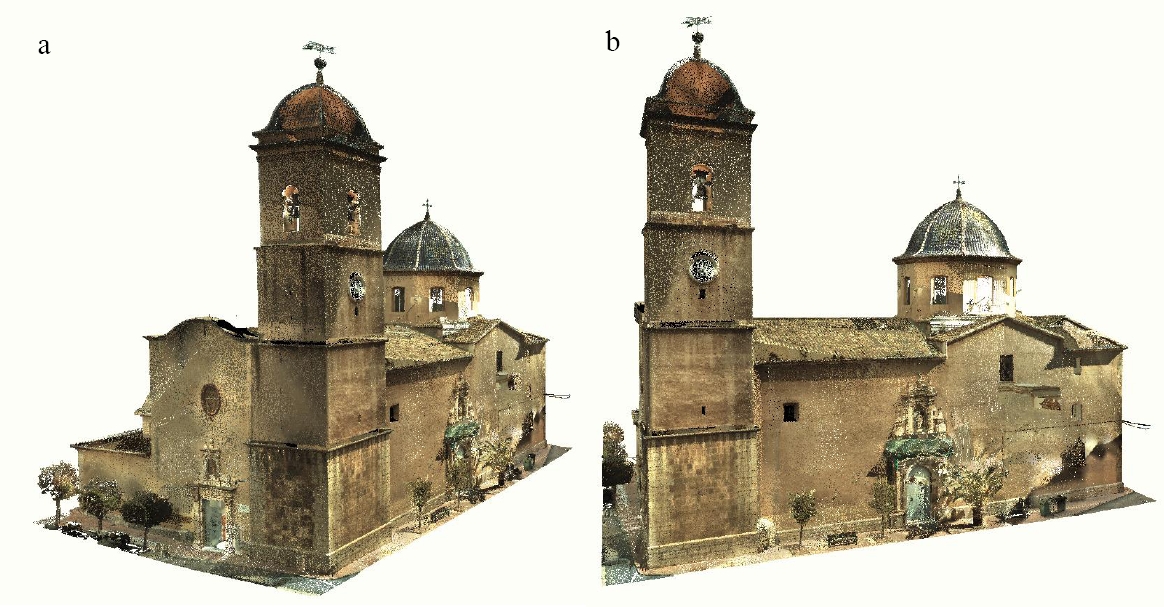
The parish church of San Pedro Apóstol of Agost, located in the province of Alicante, Spain, was built in the 16th century. Since its construction it has undergone alterations, especially in the 18th century, when various elements were added, such as the elevation of the bell tower and the side doorway that is the subject of this study, among others. This building stands out for being free-standing and having two domes: one crowning the tower and the other on a wide octagonal drum, located above the transept over four transverse arches (Figure 1a).
Figure 1. Main facades of the church obtained by topographic survey with Laser-Scanner. (a) Main entrance, (b) Facade of San Pedro.
The church consists of a central nave with four bays of considerable dimensions. The side chapels, which are separated by slightly ornamented pilasters, are distributed along the length of the nave. In addition, there is a transept and a chancel of regular depth.
The side doorway (Figure 1b), the object of analysis in this study, is located on the Epistle wall of the church, specifically at the height of the 4th bay and next to the transept.
The first record of the construction of this facade dates from 12 March 1772. It is known that the author of the doorway was Victoriano Sevilla, the director of the work. He continued working on the work until 8 August 1774, and it is assumed that the doorway as such was completed in 1773, as this date is inscribed on its spandrels.
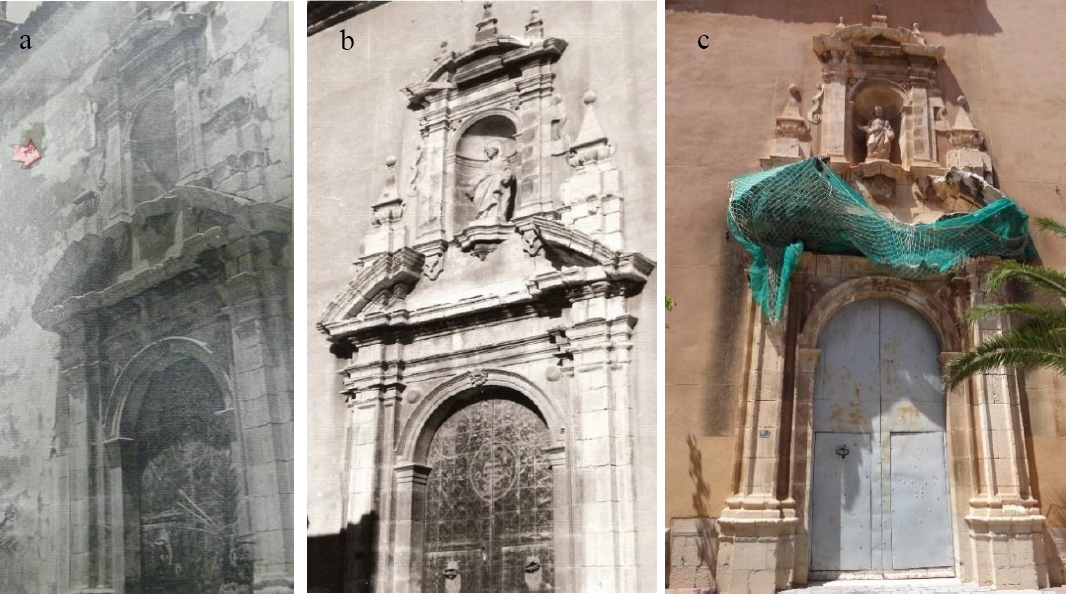
During the Spanish Civil War (1936-39) the building suffered considerable damage and even suffered a fire. The existing images on both facades were destroyed, particularly the image of Saint Peter on this facade (Figure 2a). After a major intervention of the building in the 1960s, there have been no further major structural interventions affecting this facade (Figure 2b). In 2014, some detachments were detected in elements of this facade and a protective net had to be installed, which had to be replaced again in 2021 due to detachments of stone elements (Figure 2c). In 2023, the restoration process began following a study and a project carried out at the University of Alicante.
Figure 2. Photographs of various historic situations (a) 1964, (b) 1973 (c) 2021
1.1 Architectural description
This doorway is an interesting architectural and artistic element that deserves a detailed analysis in order to understand its structure and stylistic characteristics (Vidal-Bernabé, 1981). It has two sections separated by a continuous entablature. The lower section is organized around the semi-circular doorway, the thread of which is crossed by various mouldings, with the emblem of Saint Peter in the keystone. The spandrels are occupied by two small medallions with an inscription: Year of 1773. The entrance is bordered by two pilasters with pilasters on a plinth, which have an attic base, a tapering shaft and a Doric capital. These orders support a continuous, undecorated entablature, above which rises a curved split pediment.
The second section is built around a niche, covered by an oven vault, which contains a sculpture of Saint Peter the Apostle. The saint is holding a book in his left hand and keys in his right.
The arch of the niche has the same mouldings on its threads as those of the entrance arch, the line of imposts being marked by two strips and a moulding, as in the former. The spandrels are occupied by a flower. The niche is flanked by pilasters and retro-pillars identical to those of the lower body, except for the smooth shaft. On the wall, a very geometric decoration resembling fins. The entablature is identical to that of the lower section. The doorway ends in a curved pediment and above it, three pyramids with balls. The same motifs are repeated on the sides of the second body, on the axis of the pilasters of the lower body.
1.2 Objectives
The main objective of this work is the restoration of the facade of San Pedro Apóstol of the Church of Agost (Alicante) with a minimum intervention that guarantees an architectural recovery to its initial state to solve the process of deterioration in which it was found and offer a response to the conservation of heritage respecting the charter of the restoration. Once the formal and material composition of the facade has been analysed and the lesions have been studied, the volumetric restitution of the elements necessary to recover its structural and functional mission is proposed, using compatible and light materials that ensure the conservation of the whole.
2. PRELIMINARY WORK
To approach any intervention on built heritage with rigour, prior studies must be carried out to support both the documentation and the diagnostic and execution phases of the restoration work.
2.1 Methodology
The recommendations of experts and different organisations that watch over the conservation of heritage such as Esbert and Losada (2003), Laborde, (2013), González-Moreno (1991) or Solá-Morales (2001) among others, are followed. These previous studies are mainly based on the following aspects:
a) Compilation, study and analysis of documentary data on the origin and evolution of the building and its construction, focusing on the Doorway de San Pedro Apóstol. This includes the study of possible extraction quarries. b) In situ data collection using precision instrumental techniques. Sampling of the materials that make up the facade for their characterisation and analysis. Diagnosis of their state of conservation. c) Evaluation of the effectiveness of the possible mortars and treatments to be applied depending on the characteristics of the materials that make up the doorway and considering the premises of the different restoration theories and charts.
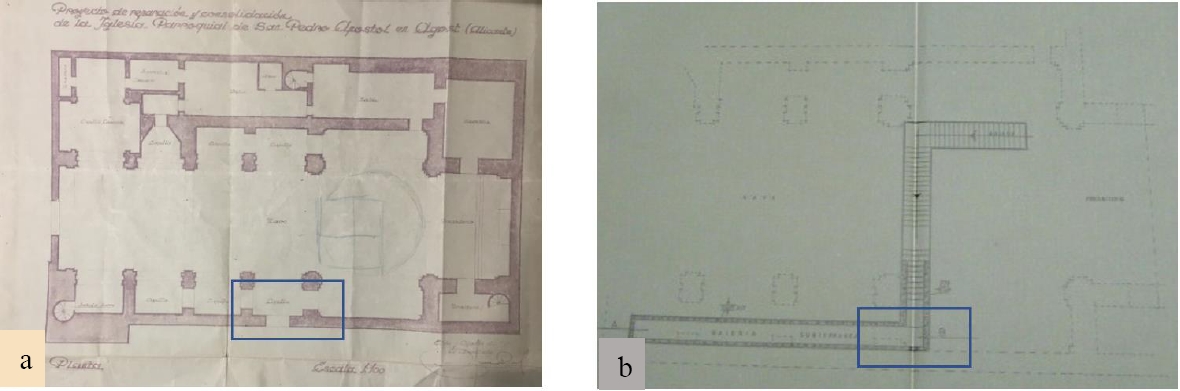
The collection of documentary data has been carried out especially in the parish archive and the Serrano y Valderrama architecture office in Elche, where the studies and project of the architect Antonio Serrano Peral, who worked on the church in the mid-20th century and was the author of the drawing in Figure 3, are kept. Mainly cracks in the interior and facades of the building caused by the excavations carried out inside the church. The damage to the doorway is not described, although the wall that supports it has a crack next to it on the right-hand side, probably due to the same cause as the cracks in the interior. Figure 3b) shows that there is a hollow area next to the facade containing the doorway, which corroborates the origin of the fracture.
Figure 3. a) General drawing of the church made for the intervention carried out in the 1960s by Antonio Serrano Peral. b) Detail of the staircase and excavated area inside the church. The location of the doorway under study is indicated. Source: private archive of the Serrano Peral family.
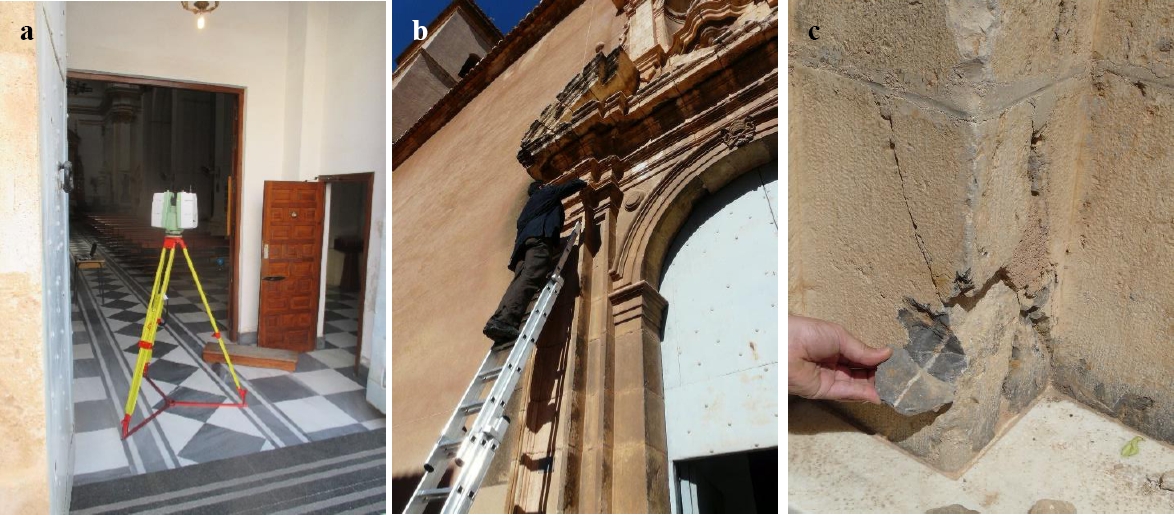
The in-situ data collection was carried out on the basis of the point cloud obtained with a laser scanner. Samples were taken without degrading the doorway, following the recommendations of experts such as Esbert and Losada (2003). Small fragments of beige calcarenite stone deposited on the cornices and a loose flake of the black stone at the base were taken (Figure 4).
Figure 4. Different aspects of data and sample collection. a) Detail of geometric recording with laser scanner. b) Collection of samples of loose fragments on the cornice. c) Black stone flake in lower corner for observation.
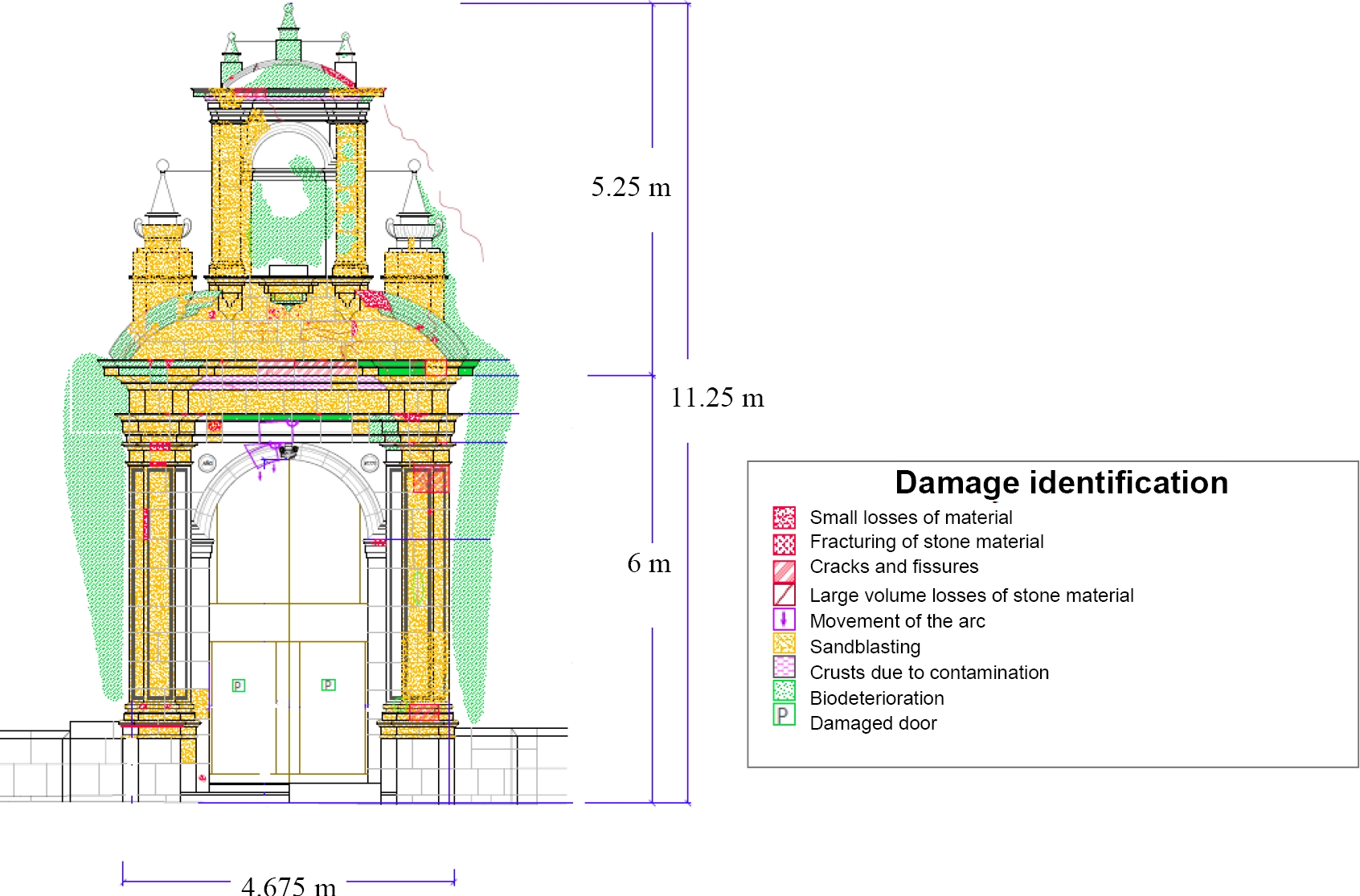
Based on the geometric information obtained, as well as the lesions observed, Figure 5 shows the situation of the doorway.
Figure 5. General geometry of the doorway. Damages observed.
2.2 Diagnosis
The diagnosis of the state of conservation of the materials that make up the facade was based on the ICOMOS-ISCS glossary (2008) and an assessment was made of the degree of deterioration and its danger by the multidisciplinary team that carried out the restoration project.
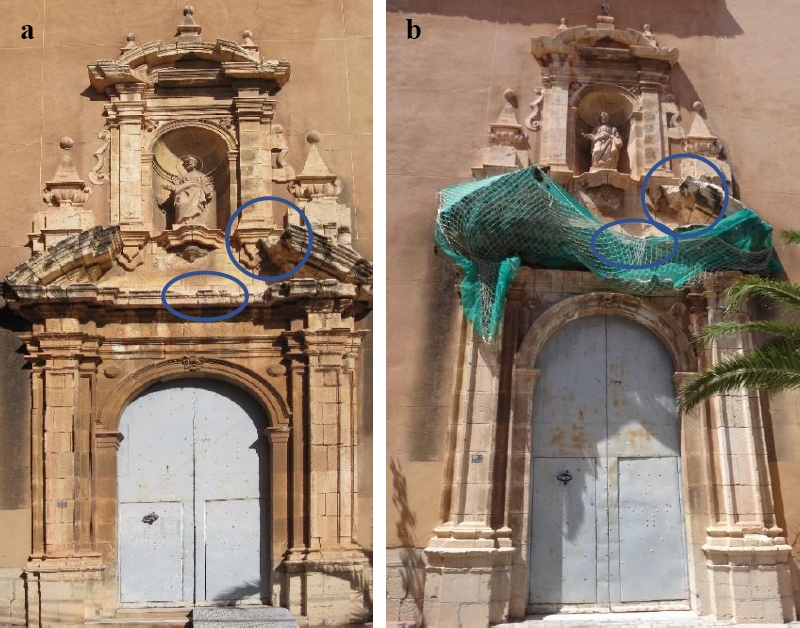
The facade of San Pedro Apóstol was much deteriorated, with stone elements missing, such as several fragments of the cornice that have come loose in recent years. If we compare the images of the facade in 2014 with those of 2021 (Figure 6), we can appreciate the increase in deterioration it has suffered. In 2014, it was recommended that protective nets be installed, as the facade was already showing a high degree of deterioration.
Figure 6. a) Aspect of the doorway in 2014 (Author Javier García Galán; 2014) and b) 2021 (author Yolanda Spairani; own elaboration). The areas with the largest landslides are indicated.
In January 2020, several large fragments fell off and were caught in the protective netting (Figure 6b). In other exposed areas of the portal, where water can be retained, further deterioration has also been observed.
For the volumetric reintegration of missing areas, it was decided to use lime mortar. There are various prefabricated mortars on the market whose density is similar to that of the stone to be replaced, but in this case the stone of the facade on which the material forming the missing volume must be anchored is very weak and has micro-cracks. This has led the project team, together with the fine arts restorer Enrique Jordá, to design light volume reintegration systems using lime mortar.
The main lesions on this facade are very high levels of stone degradation, especially in the areas most exposed to water, such as the upper finials and cornices. In the masonry to the right of the doorway there are some cracks in the facade that coincide with other cracks in the interior of the building. In a report carried out in 2020, it was diagnosed that the building suffers from differential settlement towards the tower area, so that the cracks mentioned are due to this origin. This movement may also have influenced the slipping of the voussoir in the arch of the doorway.
The lower bases are made of dolomite and are less deteriorated than the rest of the doorway, which is made of very light beige calcarenite. In the bases, the greatest degradations are the loss of grouting, alveolations and surface colour alterations, as they are currently light grey in colour, while the "fresh" sample is black. There are small detachments in the corners. This damage is due to the action of capillary rising damp and rain, especially in the presence of salts (Benavente et al., 2021). In areas where moisture is retained, inferior plants have proliferated and are capable of biodegrading the area where they grow (De los Ríos et al., 2009).
The fact that the grouting material is gypsum has meant that it is easily altered when in contact with rainwater and capillary rise, and once this joint is lost, the water can be retained, favouring the gradual degradation of the limestone.
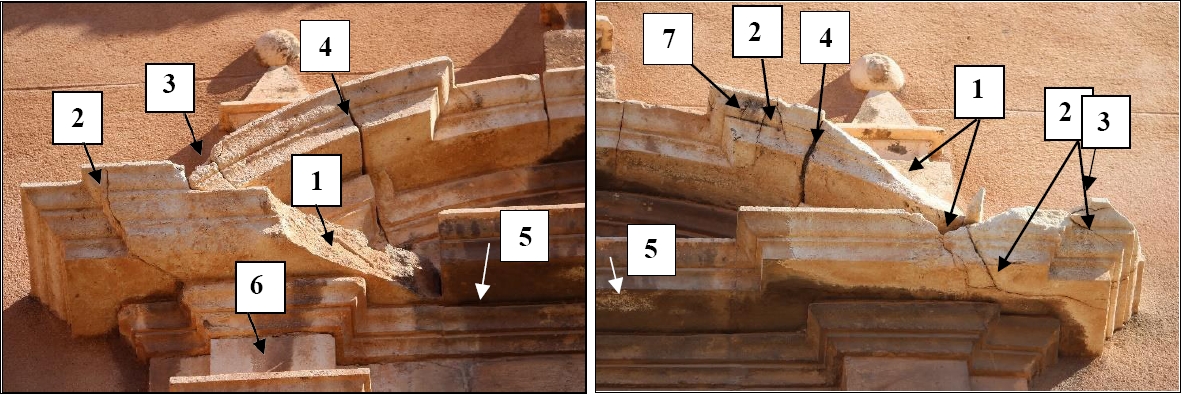
The different lesions observed on the doorway are listed below (Figure 7) in order of severity of the problem and photographs are attached to illustrate each of the different lesions:
Detachments of stone fragments Fractures in the stone Small losses of stone material. Widespread loss of grouting material Crusts due to contamination Dirt deposits Bio deterioration Alteration of surface patina
Figure 7. Detail of the lesions in the upper area. Deposits of dirt can be seen in the areas protected from rain.
3. MATERIALS USED
The doorway was built with two types of stone, a very light-coloured calcarenite on the upper part that now has an ochre patina, and a grey limestone with veins on the lower bases and plinth that has faded over the years to a light grey colour.
The grout mortar, the calcarenitic stone and the grey limestone of the plinth have been analysed.
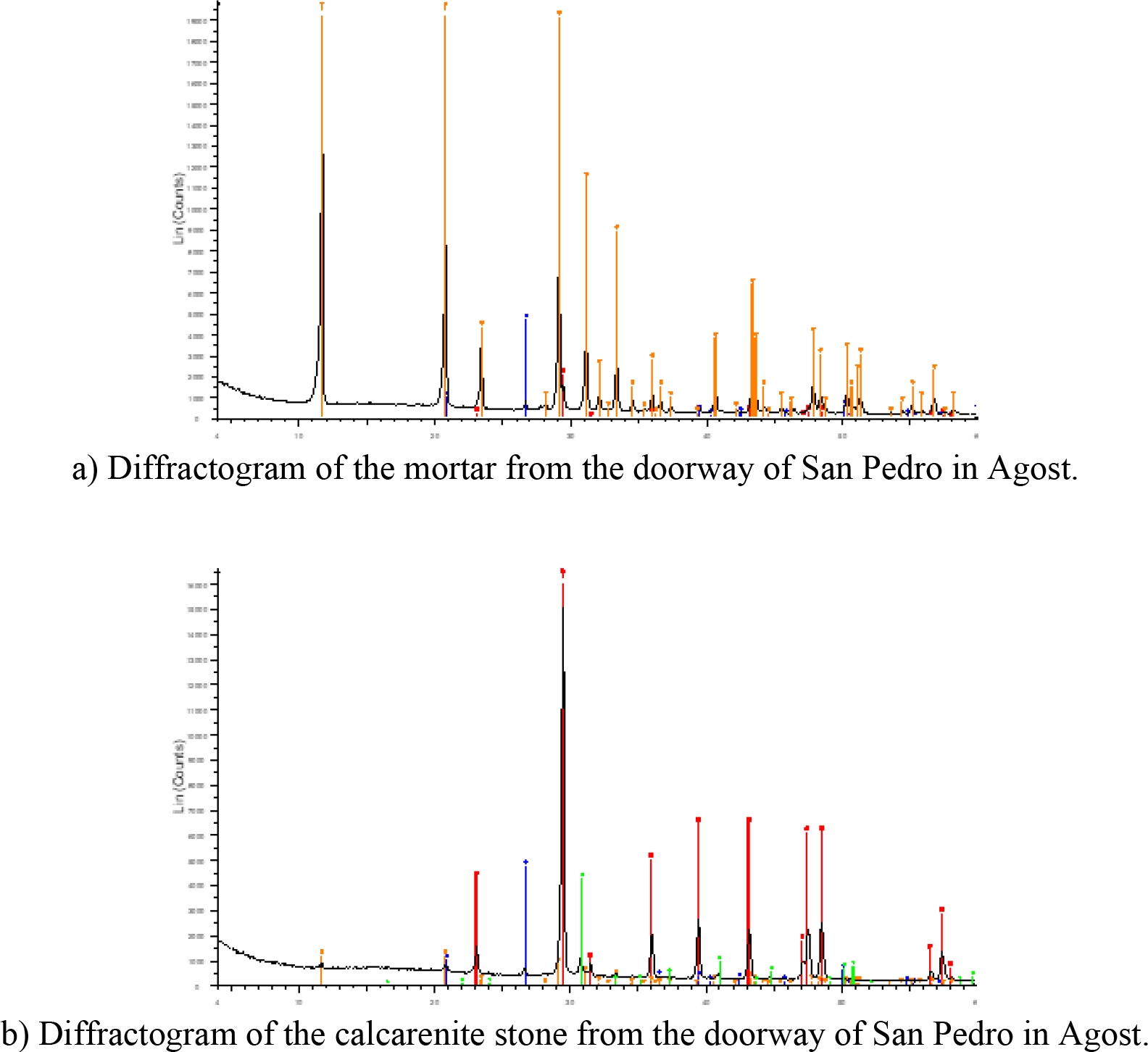
The mortar was found to be gypsum as shown by the XRD results (Figures 8a and 8b). The stone is mainly composed of calcite (calcium carbonate CaCO3), with some dolomite (Calcium magnesium carbonate CaMg(CO3)2), quartz (mineral composed of silica SiO2) and gypsum (Calcium sulphate CaSO4) as can be seen in the following diffractograms in their composition, where the orange peaks in the graph correspond to gypsum, limestone to red, siliceous to blue and dolomite to green.
Figura 8. Difractograms
These results indicate a significant presence of calcium sulphate (orange peaks) in existing mortars that are exposed to atmospheric agents (rainwater), and therefore its weakness and deterioration as a hygroscopic material (gains and losses of water in its molecular composition CaSO4.n(H2O)) which makes it not very stable; but also this presence of sulphates can accelerate stone degradation as the stone contains the magnesium of the dolomite and very harmful salts such as magnesium sulphates can be produced (Grossi and Esbert, 1994), (Benavente, 2002, 2021). (Figure 9).
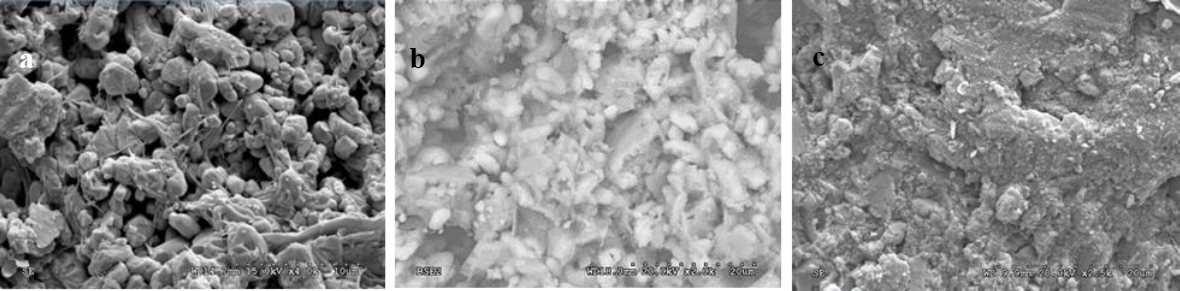
Figure 9. Microphotographs of the materials that make up the doorway of San Pedro de Agost. a) Calcarenitic stone, showing clays and abundant porosity. b) Gypsum mortar with signs of recrystallisation. c) Black limestone with occasional salts.
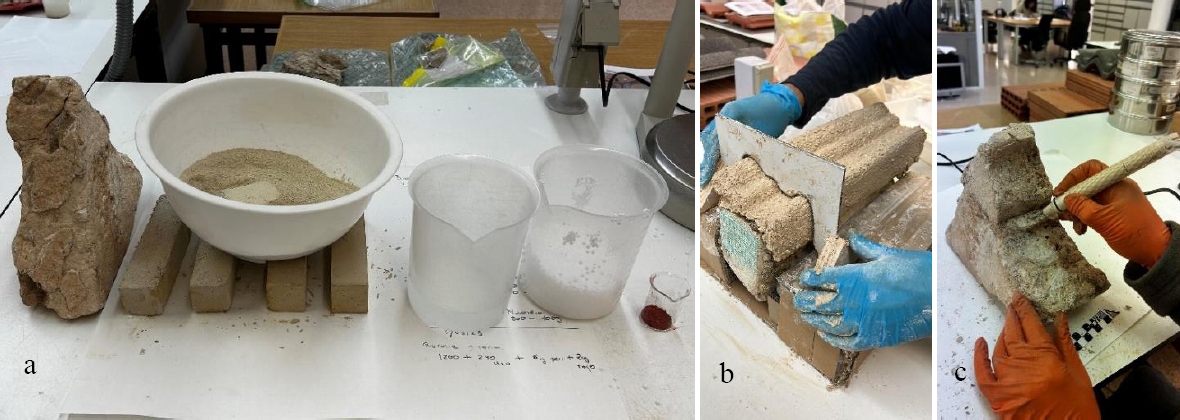
A fragment that had become detached from the facade was taken to the Architectural Constructions laboratory of the University of Alicante and was used as the basis for the study of density and colour, as well as for testing cleaning techniques. Figure 10 shows some of the tasks carried out in the laboratory.
Figure 10. Different aspects of the previous studies carried out for the restoration of the doorway. a) Components prepared to make test specimens for subsequent study together with the fragment of the cornice of the doorway (bio-lime, water, eps beads and natural pigments). b) Detail of the test carried out in the reintegration laboratory with a light polystyrene core and exterior lime mortar. c) Detail of a cleaning test using ultrasound.
From all this it can be deduced that the products to be used in the restoration must be compatible with the stone and with the sulphates in the grouting mortars. Lime mortars meet these requirements, which is why it was decided to choose the mortar "Morcem lime stone mortar" from the company Puma, as it had been previously tested by the project drafting team and the results were satisfactory in terms of mechanical strength. (Rmc=6,55N/mm2 with 30% eps pearls), petrophysical properties and against crystallisation of salts. The mortar "Biocalce MuroSeco" from the company Kerakoll was also tested, but its base colour was not compatible with the stone to be reintegrated, although its characteristics are mechanically compatible.
With the data obtained from the study of these materials, we have proceeded to study the possible quarries in the area. Some old quarry fronts have been located to the northeast of Agost, samples have been taken and characterized, which could be used in future interventions. In the case of the facade, the insertion of this type of material was not considered necessary.
4. INTERVENTION PROCEDURE
Both conceptually and in terms of action for the restoration of the facade, the recommendations of many expert authors in heritage restoration such as Esbert and Losada, (2003), González-Moreno (2001, 2012) and Solá-Morales (2001), among others, have been followed. The starting premises have been:
1.-Minimal intervention.
2.- Cleaning without eliminating the natural patina of ageing.
3.-Restitution of volume in those elements with a structural and/or functional mission.
4.-Compatibility of materials.
5.-Structural consolidation securing the element to be conserved.
Preventive restoration.
7.-Differentiation between added and pre-existing.
8.-Documentation of the whole process.
9.-Dissemination of the results of the restoration.
Prior to the start of the work, cleaning tests were carried out in situ, in addition to those previously carried out in the laboratory with ultrasound. Various techniques were tested to determine the method and time of action to be left without damaging the base, as one of the premises of this project was not to remove the natural patina of ageing.
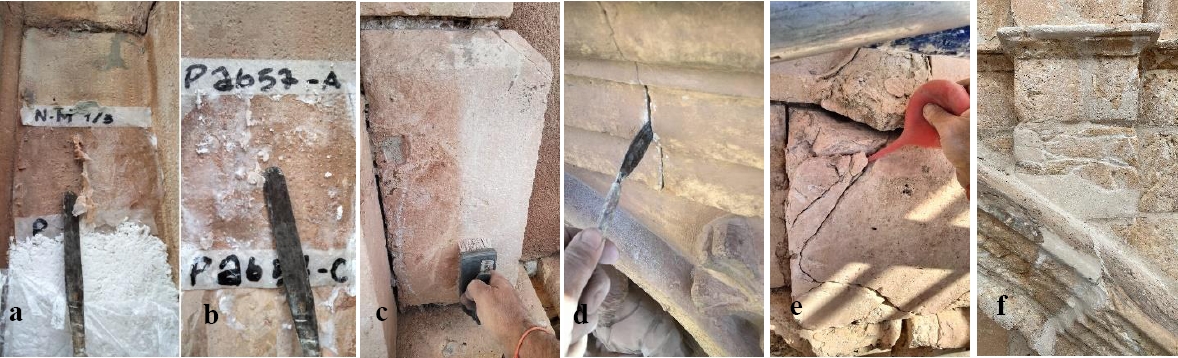
The following product has been applied: Arbocel (cellulose pulp) with different products such as distilled water and AB57 on an inconspicuous area of the doorway. In both cases it was protected with plastic film to prevent the liquid from evaporating too quickly. It was first left to act for 2 hours, then for 4 hours, and it was observed that in both cases more time was needed, so it was left to act for 24 hours until it was cleaned (figure 11). The result obtained with water was not satisfactory, as hardly any adhering dirt had been removed. With AB57 it worked well. A technique has also been tested which is applied in liquid form and once applied solidifies, trapping the surface dirt in a period ranging from 1 to 3 days. In our case, it was decided to apply a 33% proportion of strong product with 67% of weak product on the entire front doorway with "Clean Galena" heritage cleaner (figure 11a), in those areas where the soft bristle brush did not remove the dirt.
Figure 11. Different aspects of pre-testing of crack cleaning and crack sealing.
The intervention on the facade began with a review in situ at the foot of the scaffolding to verify the solutions adopted in the project.
During the cleaning process, small fragments began to break off and some areas of stone had to be consolidated. In this case, ethyl silicate was applied internally to the cracks. This material has been previously tested in the laboratory with similar stone in the area and has a high consolidating power, although it slightly modifies the colour and reduces permeability , but it is effective as an internal binder.
In the cracks (>1mm), lime grout was injected after previously cleaning them with air (figure 11e) and wetting them with water, in this case "Mape Antique I" of the Mapei brand was used. The joints between ashlars have been cleaned with a spatula (figure 11d) since, as we have seen above, they were made of plaster and were disaggregated. Air is applied to clean internally before injecting lime grout. Once the entire portal was cleaned, the cracks and fissures were sealed with lime grout. The large areas have been reintegrated with a lightweight system designed for this case, as the base stone is very degraded, and the aim has been to subject the supporting stone to as little external stress as possible.
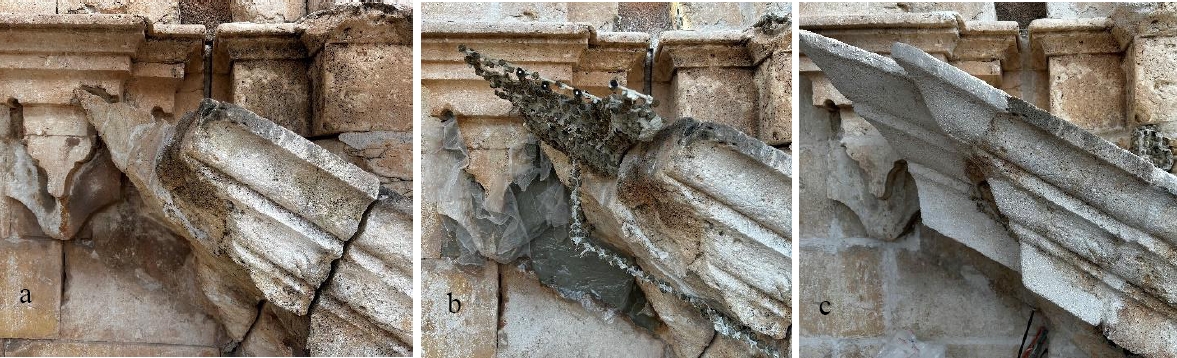
The joint between the filler material and the base is made by means of rods of glass and/or carbon fibres taken with resins, for this operation the stone must be drilled, which generates vibrations and possible damage. All of this is what has led the drafting team and the restoration technician to take the decision not to use similar stone, the density of which is 2,1g/cm3. (Figure 12).
Figure 12. Different aspects of the restitution of volume using mortar with lightened core and light mortar. a) Missing area already consolidated while waiting to drill holes for anchoring. b) Appearance of the lightened core prepared to add mortar externally. c) Appearance with mortar already reintegrated, pending the application of glazing with lime water and pigments to blend the added area with the rest of the facade.
The system designed consists of an extruded polystyrene core that is carved to the shape of the stone leaving at least 3 cm to reintegrate with lime mortar. The polystyrene is wrapped with fibre mesh, epoxy resins are applied and lightened aggregates are adhered to increase the surface area of adhesion to the mortar. It is anchored, no less than 20 cm inside the stone of the doorway, with carbon fibre and glass rods, depending on the volume to be reintegrated. Once finished, the pigmented lime mortar is applied in mass and with a percentage of 25% of eps beads, to lighten the mortar. In this way, the weight of the material used has been reduced by approximately 75%.
5. CONCLUSIONS
The intervention has allowed an intense collaboration between researchers from the University of Alicante to apply innovative techniques in restoration and above all in reintegration of the volume using new light materials compatible with the historical heritage. The final result has made it possible to provide security and avoid the problems of disintegration of the stone, which were very advanced. Mortars, mechanical and chemical treatments were also used to clean the stone, which after years of exposure to pollution had impregnated the pores of this very soft and porous stone. In short, with a simple and economical intervention, a preventive restoration has been carried out, recovering the rain protection elements and restoring the visual image of this part of the monument.
6. ACKNOWLEDGEMENTS
We would like to thank the City Council of Agost for all the support for the realization of the works, the regional administration, Deputation of Alicante, for the funds raised and the Parish of San Pedro Apóstol for the facilities given for the realization of this intervention.
7. REFERENCES
Benavente, D. (2002). Modelización y estimación de la durabilidad de materiales pétreos porosos frente a la cristalización de sales. Tesis doctoral. Universidad de Alicante. https://rua.ua.es/dspace/bitstream/10045/9912/1/Benavente-Garcia-David.pdf
Benavente, D., De Jongh, M., Cañaveras, J. C. (2021). Weathering processes and mechanisms caused by capillary waters and pigeon droppings on porous limestones. Minerals, 11(1), 18. https://doi.org/10.3390/min11010018
De los Ríos, A., Cámara, B., García del Cura, M. A., Rico, V. J., Galván, V., Ascaso, C. (2009). Deteriorating effects of lichen and microbial colonization of carbonate building rocks in the Romanesque churches of Segovia (Spain). Science of The Total Environment, 407, 3, 1123-1134. https://doi.org/10.1016/j.scitotenv.2008.09.042
Esbert, R. M., Losada, J. M. (2003). Criterios de Intervención en materiales pétreos. Revista del Instituto de Patrimonio Histórico Español. 2.
García Galán, Javier (2014). Análisis comparativo del comportamiento de diferentes Morteros de Reintegración en la construcción: Caso de la Iglesia de San Pedro Apóstol en Agost (Alicante). Trabajo Fin de Grado. Grado en Arquitectura Técnica. Universidad de Alicante (España)
González-Moreno Navarro, A. (1991), La restauración de monumentos a las puertas del siglo XXI. Informes de la Construcción. 43 (413): 5-22. https://dialnet.unirioja.es/revista/2142/V/43
González-Moreno Navarro, A. (2012), Restauración monumental: ¿el método en crisis?. Informes de la Construcción. 64: 13-22. https://doi.org/10.3989/ic.11.077
Grossi, C. M., Esbert, R. M. (1994). Las sales solubles en el deterioro de rocas monumentales. Revisión bibliográfica. Materiales de construccion, 44, (235), 15-30. https://doi.org/10.3989/mc.1994.v44.i235
ICOMOS International Scientific Committee for Stone (ISCS) (2008), ICOMOS-ISCS: Illustrated glossary on stone deterioration patterns. http://www.international.icomos.org/publications/monuments_and_sites/15/pdf/Monuments_and_Sites_15_ISCS_Glossary_Stone.pdf
Laborde, A. (2013). Proyecto COREMANS: Criterios de intervención en materiales Pétreos. IPCE. Ministerio de Educación, Cultura y Deporte.
Solá-Morales, I. (2001), Teorías de la Intervención Arquitectónica. Revista PH. No. 37. https://doi.org/10.33349/2001.37.1269
Vidal-Bernabé, I. (1981). La Escultura Monumental barroca en la diócesis de Orihuela-Alicante. Excma. Diputación provincial de Alicante. Pag. 148-149.