
| Basic Research | https://doi.org/10.21041/ra.v14i3.760 |
Experimental analysis of the tensile behavior of concrete reinforced with Brazilian glass textile
Análisis experimental del comportamiento a tracción del hormigón armado con tejido de vidrio brasileño
Análise experimental do comportamento à tração do concreto reforçado com têxtil de vidro brasileiro
J. Rizzo1* , E. S. Bastos2, L. A. Reginato1, P. M. Lazzari1, L. C. P. da Silva Filho1
1 Postgraduate Program in Civil Engineering (PPGEC), Federal University of Rio Grande do Sul (UFRGS), Porto Alegre, Brasil.
2 Postgraduate Program in Mining, Metallurgical and Materials Engineering (PPGE3M), Federal University of Rio Grande do Sul (UFRGS), Porto Alegre, Brasil.
*Contact author: joirizzo@gmail.com
Received: 01/06/2024
Revised: 02/08/2024
Accepted: 07/08/2024
Published: 01/09/2024
| Cite as: Rizzo, J., Bastos, E. S., Reginato, L. A., Lazzari, P. M., Silva Filho, L. C. P. da (2024), “Experimental analysis of the tensile behavior of concrete reinforced with Brazilian glass textile”, Revista ALCONPAT, 14 (3), pp. 275 - 287, DOI: https://doi.org/10.21041/ra.v14i3.760 |
ABSTRACT
In this study, the mechanical behavior of concrete structures reinforced with one and two layers of the Brazilian glass textile “AR-360” was verified through direct tensile tests. The analysis of the mechanical behavior of the structures was performed with stress-strain curves, evaluating the transition points of the formed stages, rupture mode, rupture stress and strain, as well as an analysis comparing experimental results with analytics. Regarding the results, there was a structural inability of the pieces reinforced with a layer of glass textile. In the samples in which reinforcement with two layers of the aforementioned material was evaluated, the three stages present in the stress-strain curves were correctly identified, as predicted in the literature for the structures evaluated.
Keywords: textile concrete; direct traction; glass textile; mechanical behavior.
1. INTRODUCTION
Textile concrete, or simply TRC (Textile Reinforced Concrete), is formed by a fine-grained cementitious matrix and textile fabrics that have high tensile strength. (Hegger et. al., 2007; Spelter et. al., 2019; Adam et. al., 2020). According to Kulas (2013) and Spelter et. al. (2019), the most common fabrics to be used with textiles are alkali-resistant glass and carbon fabrics.
As textile fabric is a polymeric material, it does not produce corrosion in structures, which helps to reduce pathological manifestations of buildings and significantly increase the useful life of structures (Spelter et. al., 2019; Adam et. al., 2020). In addition to this advantage, due to their high tensile strength, structures reinforced with this element can have less concrete coverage and, consequently, be lighter, slimmer and more economical (Hegger and Voss, 2008).
In this sense, Germany, which stands out as the world leader in research on textile concrete (Scheerer et. al., 2015), has been building structures that encompass bold and modern design concepts for this composite material, such as: shell-shaped structures (Hegger et. al., 2018); bridges (Michler, 2013) and facades (Raupach and Cruz, 2016). According to Brameshuber et. al. (2016), direct tensile tests make it possible to identify more clearly the potential of textile-reinforced concrete through its mechanical behavior. According to Jesse (2005), Molter (2005), Voss (2008) and Kulas (2013), the mechanical behavior of this material can be explained through the stress-strain curves, consisting of three stages: I, IIa and IIb.
Santis et. al., (2017) identified transition points between the stages that help in understanding the behavior of the analyzed material. According to the authors, stress () and strain () correspond to the transition points between stages I and IIa. Still in stage I, the modulus of elasticity (EI) of the textile concrete is identified. Between the end of stage IIa and the beginning of stage IIb, stress () and strain () are found. At the peak of the graph, it is possible to identify the rupture stress and strain, named as () and ().
In Brazil, there are few scientific investigations on textile concrete. Research by Giese (2019), Reginato (2020), Silva e Silva (2020), Dalazen (2021) and Ortolan (2021) are examples of Brazilian studies on this material. In this sense, it is important to conduct further investigations into the mechanical behavior of textile fabrics available in Brazil, adapted to the brazilian inputs that make up concrete, in order to advance scientifically the understanding of this material in the country.
Therefore, this research corresponds to an analysis of the mechanical behavior of concrete reinforced with Brazilian alkali-resistant glass textile from the company Texiglass, called “AR-360”, where, through direct tensile tests of samples reinforced with one and two layers of the textile fabric, curves of stress-strain of the material were generated, and from them, a detailed analysis of the composite material was carried out. In addition, the results obtained experimentally were also verified with analytical calculations.
2. METHODOLOGY
The methodology of this work consisted of carrying out three stages, namely: preparation of the cement matrix; samples reinforced with textile fabric and direct tensile tests. Below, a brief summary of each stage indicated above is detailed.
2.1 Preparation of the cementitious matrix
One challenge for using textile reinforcement with concrete is that it needs to be fluid and self-compacting, so that the concrete can move freely between the fabric grids without the need for vibration. In addition to these characteristics, the concrete must have high compressive and tensile strengths, thus providing greater mechanical capacity to the composite material.
In order to use a concrete that meets the above characteristics without excessive losses during mix tests, the dosing methodology for ultra-high-performance concrete (UHPC), proposed by Christ (2019), was applied. In this method, the theoretical packing curve of the materials was calculated using the Funk and Dinger equation. After selecting the constituent inputs of the cement matrix, the program developed by Christ (2019) in Excel software was used to compare the theoretical packing curves and the chosen mixture, whereby iterating the quantity of inputs, it was possible to choose the mix with the lowest packing deviation index (IDE), which was equal to 114.2.
Table 1 shows the mix and consumption of the constituent materials of the cement matrix of this research. By applying this dosage method, it was possible to produce a self-compacting, cohesive, fluid concrete, with an average compressive strength at 28 days equal to 80.07 MPa and an average tensile strength equal to 4.5 MPa. Figure 1 shows the fluidity of this concrete (a) and its spreading (b) without exudation and segregation problems.
Table 1. Mix design of concrete.
| Component | Unit mix | Content (Kg/m³) |
| Cement | 1 | 471.26 |
| Active Silica | 0.24 | 113.1 |
| Fly Ash | 0.76 | 358.16 |
| Calcium Carbonate | 0.71 | 334.59 |
| Sand | 2.05 | 966.08 |
| Water/Binder | 0.28 | 263.9 |
| Superplasticizer | 3% | 28.28 |
| Viscosity Modifier | 1% | 9.43 |
| Air Detraining | 1% | 9.43 |
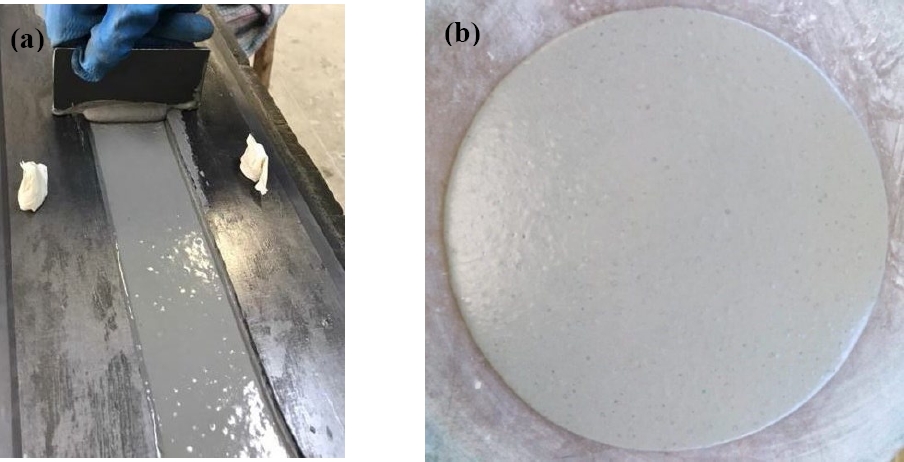
Figure 1. Appearance of concrete (a) and spreading of concrete (b).
2.2 Samples reinforced with “AR-360” glass textile
The glass textile selected for this research is alkali-resistant and is called “AR-360”, with 2400 tex, from the company Texiglass, as shown in Figure 2 (a). The main direction chosen for analysis purposes in the tensile tests was the warp direction. According to the characterization carried out by Dalazen (2021), the cross-sectional area of the warp direction is equal to 1.80 mm², with a 10 mm distance between the grids of the textile mesh. According to mechanical tests carried out in a previous work, (Rizzo, 2023) the average tension of the fiber yarn of this material in the warp direction was found to be equal to 566.72 MPa.
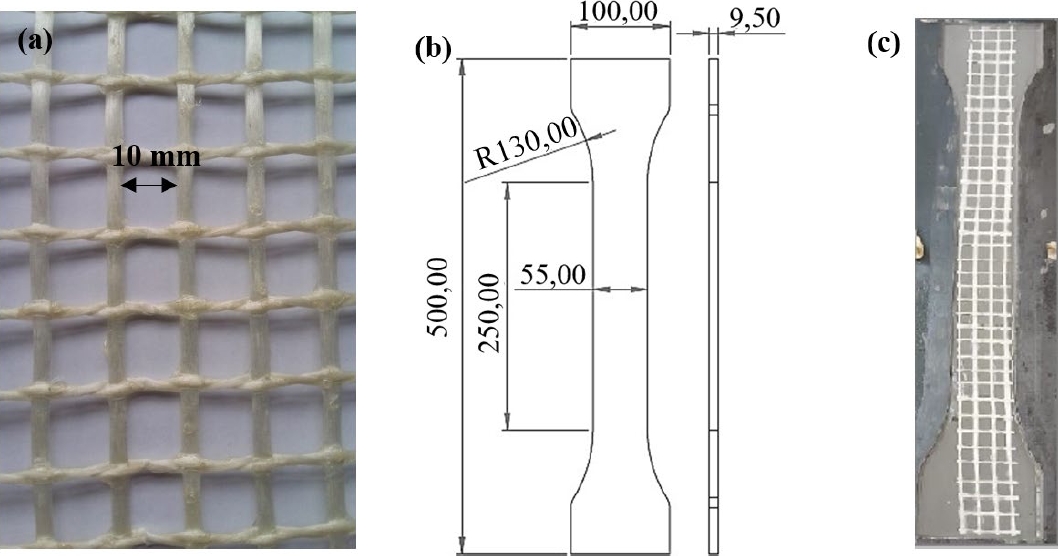
Figure 2. Glass textile (a) Dimensions of the sample (b) and Demonstration of the textile layer on the sample (c).
2.3 Development of reinforced samples
Seven samples reinforced with textile fabric were analyzed. The structures named CTG11; CTG12 and CTG13 correspond to the samples that have textile reinforcement of only one layer, or 1.38% textile reinforcement rate (ρ). The samples CTG21; CTG22; CTG23 and CTG24, on the other hand, have two layers of textile fabric reinforcement, which corresponds to the total of ρ = 2.77%. Regarding their manufacture, structures in the shape of a “bone” were chosen, as shown in Figure 2 (b).
The selected forms were built in steel. Concerning the manufacture of the samples, the textile reinforcement was inserted using the lamination technique, as specified by Brameshuber et al. (2016). Through this, the samples were manufactured in layers, with the first layer of concrete being added to the form first, then the textile reinforcement (Figure 2 (c)) and finally the last layer of concrete. This procedure was repeated until all layers were placed in the form. It is worth mentioning that the height of the concrete was controlled using a measuring ruler, as shown in Figure 1 (a), where, in the samples with one layer of textile reinforcement, the textile fabric was placed in half the thickness of the sample, and in the case of two layers, they were inserted with an equidistance equal to 3.16 mm.
2.4 Direct tensile tests
Direct tensile tests were performed with concrete curing age of 28 days, in a press with a capacity of 100 kN and a displacement speed of 1 mm/min. A steel gripper system was designed so that the transmission of forces from the press to the structural part was done by steel plate pieces, located in the chamfers of the samples. In this same location, 1 mm thick rubber was inserted to reduce the concentration of stresses in the part.
Also with the aim of reducing excessive load concentrations in the gripper area, thus helping to ensure that the rupture actually occurred in the measurable area of the parts, two layers of carbon fiber were placed and glued to the ends of the structure using sikadur resin. In Figure 3 (a), the rupture of the sample reinforced with glass fiber in the measurable area can be seen, in addition to the carbon fiber located at the ends of the part.
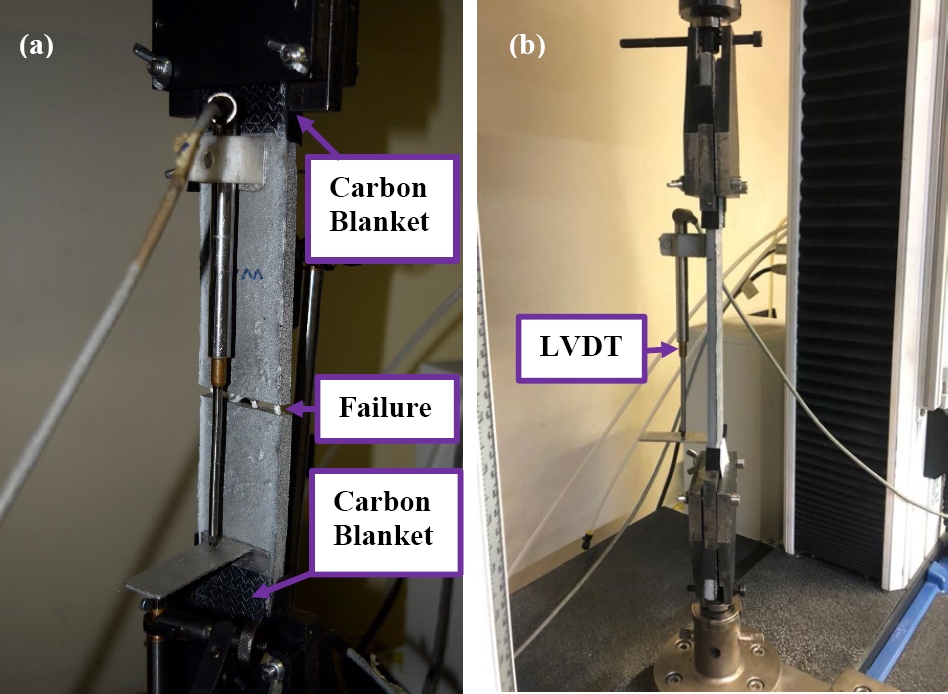
Figure 3. Sample rupture in the measurable area (a) and Demonstration of the gripper and LVDT system (b).
In order to check the displacement of the parts, an LVDT with a 10 mm cursor fixed to one of the faces of the sample was used, as shown in Figure 3 (b).
3. RESULTS
The results of this research were expressed through stress-strain curves. The transition points between the stages were described in Tables, as well as the rupture mode, in addition to the maximum rupture stress and strain. As indicated by Santis et. al. (2017), in order to prevent possible errors resulting from the variation in concrete thickness, the stress analysis was performed through Tables and description of the results, considering the stress of the fiber yarn of the samples, obtained by dividing the force by the total cross-sectional area of the fiber yarns of the textiles (Atex,n). However, the stresses of the composite material were also represented on the right side of the “y” axis in the graphs, in order to assist in understanding the mechanical behavior of the samples.
3.1 Concrete reinforced with one layer of glass textile
In the three samples analyzed with the reinforcement of one layer of glass textile, the formation of stage I was verified correctly, as predicted by the literature, being linear, without the formation of cracks. Figures 4 (a), (b) and (c) show the stress-strain curves of the referred samples. Regarding the type of rupture, all presented rupture in the measurable area of the pieces, which can be classified as being a type “B” rupture, as determined by Santis et. al., (2017). Figures 5 (a) and (b) show the rupture in the measurable area of samples CTG11 and CTG13, respectively.
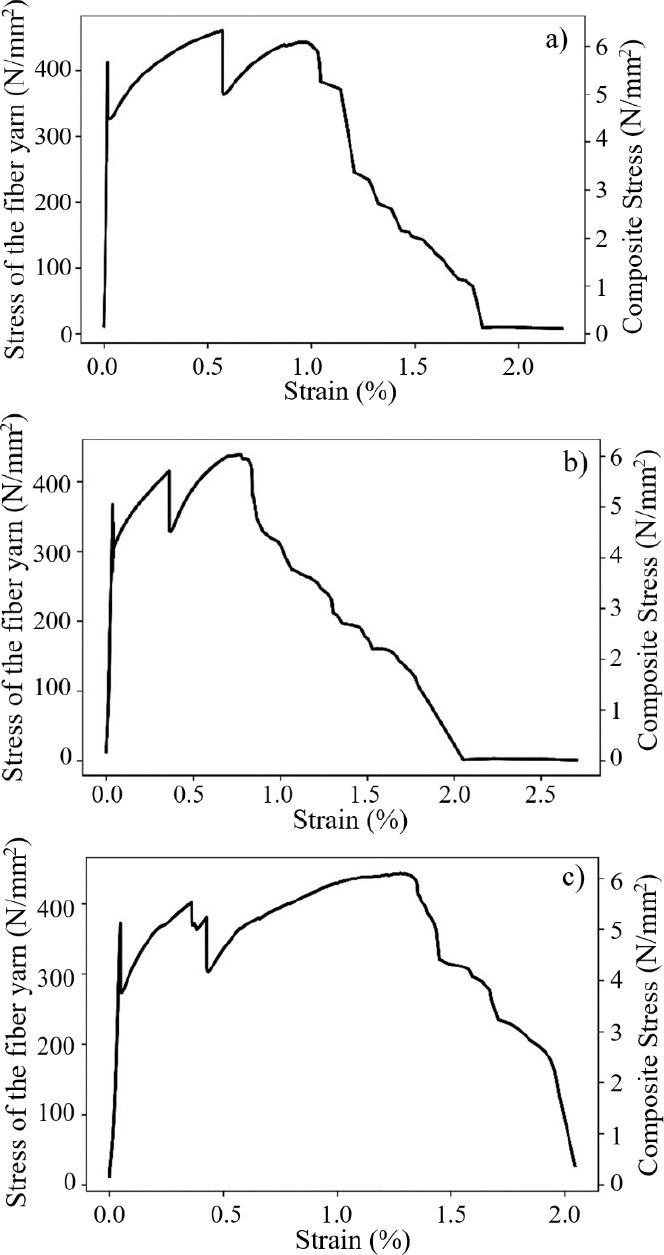
Figure 4. Mechanical behavior of samples CTG11 (a), CTG12 (b) and CTG13 (c).
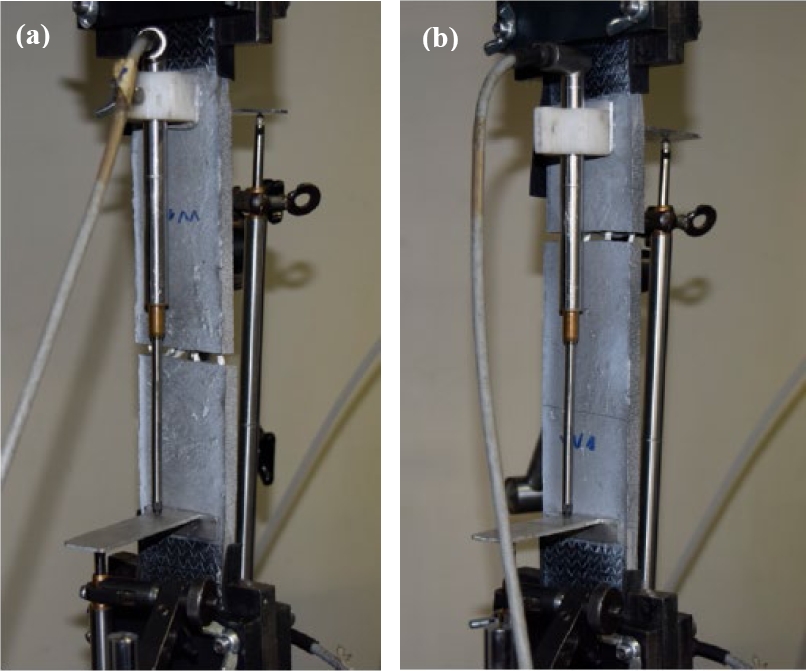
Figure 5. Rupture of samples CTG11 (a) and CTG13 (b).
After the formation of the first crack in the concrete, stage IIa began (Jesse, 2005). At this stage, the literature indicates the formation of multiple cracks. However, this behavior was not observed in the samples reinforced with one layer of textile fabric. In samples CTG11 and CTG12, only two cracks formed at this stage, with no clear distinction between stages IIa and IIb, the latter being characterized by the end of cracking and the respective rupture of the material. It is worth mentioning that Ortolan (2021) also did not clearly identify the formation of the three stages in the stress-strain response curve of samples reinforced with one layer of brazilian glass textile.
However, in sample CTG13, after the formation of the third crack in stage IIa, stage IIb was formed, as observed in Figure 4 (c). In this case, it is suggested that there was a greater connection between the concrete and the textile fabric, resulting in a higher rupture deformation value () = 1.32%, as shown in Table 2.
Table 2. Samples CTG11, CTG12 and CTG13 results.
| CP | Rupture | |||||||
| CTG11 | 0,019 | 0,977 | 412 | 443 | 443 | 0,977 | 2080,8 | B |
| CTG12 | 0,036 | 0,761 | 367 | 439 | 439 | 0,761 | 1019,44 | B |
| CTG13 | 0,047 | 0,639 | 372 | 377 | 441 | 1,32 | 791,49 | B |
| Average | 0,034 | 0,792 | 383,66 | 419,66 | 441 | 1,01 | 1297,24 | |
| CV (%) | 32,43 | 17,63 | 5,24 | 7,19 | 0,37 | 22,58 | 43,3 |
As in CTG11 and CTG12 there was no distinction between stages IIa and IIb, the same values of the transition points between stages IIa and IIb were considered, namely and , in addition to and , as shown in Table 2.
3.2 Concrete reinforced with two layers of glass textile
The samples that were reinforced with two layers of glass textile correctly presented the three stages present in the stress-strain response curve, as predicted by the literature. In stage IIa, multiple cracks were formed, with a clear distinction of the transition points between stages IIa and IIb.
Regarding the type of rupture, samples CTG21, CTG22 and CTG24 presented rupture in the measurable area, and can be classified as a type “B” rupture. In sample CTG23, the rupture occurred close to the gripper area, however, there was no displacement of the concrete or sliding of the fabric. In addition, it was observed that there was no mechanical loss of this piece, since the rupture stress and strain values were close to the samples in which the rupture occurred in the measurable area. Therefore, sample CTG23 can be classified as a type “A” rupture, as indicated by Santis et. al., (2017).
Figure 6 shows the stress-strain curves of the samples in question. In samples CTG21, CTG22 and CTG23, small load drops were observed in the structures during stage IIb. According to Jesse (2005), these load drops can be classified as diffuse cracks.
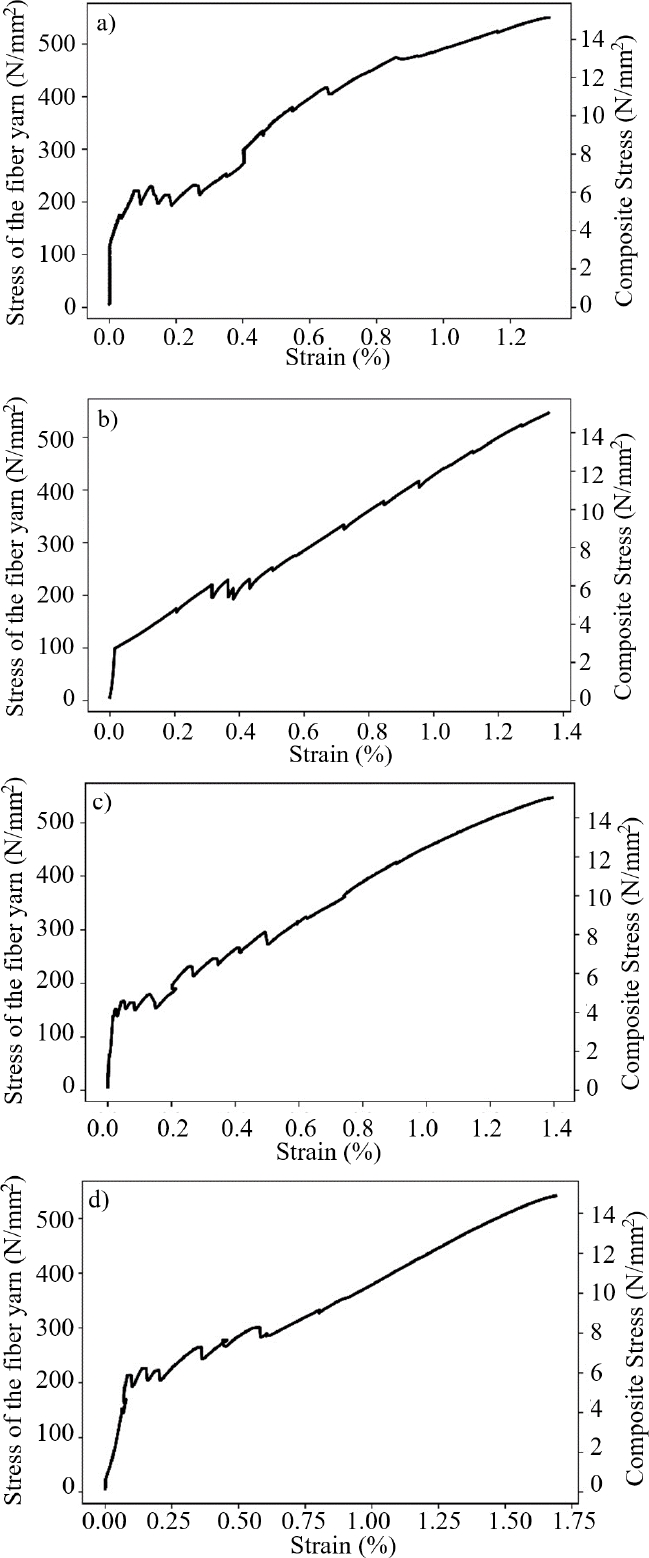
Figure 6. Mechanical behavior of samples CTG21 (a), CTG22 (b), CTG23 (c) and CTG24 (d).
Table 3 presents the results obtained from the experimental analysis of these samples. Sample CTG21 stood out in terms of maximum rupture stress, , reaching a maximum value of 550 N/mm². Sample CTG24 obtained the highest values between the transition points of stages I and IIa ( e ) and IIa and IIb ( e ). In this case, it is suggested that there was a higher quality of connection between the cement matrix and the textile fabric, thus reaching the highest value of rupture strain, , among the samples analyzed, which was equal to 1.7%.
Table 3. Samples CTG21, CTG22, CTG23 and CTG24 results.
| CP | Rupture | |||||||
| CTG21 | 0,0309 | 0,412 | 172 | 304 | 550 | 1,32 | 556,63 | B |
| CTG22 | 0,0502 | 0,672 | 106 | 306 | 530 | 1,37 | 211,15 | B |
| CTG23 | 0,0552 | 0,6 | 153 | 315 | 545 | 1,39 | 277,17 | A |
| CTG24 | 0,0827 | 0,806 | 214 | 329 | 541 | 1,7 | 258,76 | B |
| Média | 0,054 | 0,622 | 161,25 | 313,5 | 541,5 | 1,44 | 325,93 | |
| CV (%) | 33,81 | 22,85 | 24,05 | 3,14 | 1,36 | 10,34 | 41,53 |
3.3 Comparison of experimental and analytical results
The model chosen for the analytical calculation of the rupture stress of thin concrete elements reinforced with glass textile was that of Kulas (2013), as indicated in expression 1 below:
| (1) |
Onde:
e = Cross-sectional area of warp and weft, respectively;
e = Tensile strength of the textile fabric of the warp and weft, respectively;
= Reduction factor equal to 0.84 due to lateral contraction of the locks;
α = Angle between force and bending direction.
In this calculation, the first part of equation 1 was considered, since the main direction chosen for the technical tests was the warp direction. Considering the average stress of the glass textile as being equal to 566.72 N/mm², the rupture stress of the analyzed samples was found. Table 4 shows the results obtained experimentally and analytically, with the analysis of the difference between both, in percentage.
Table 4. Results of stresses obtained experimentally and analytically.
| CP | ft Experimental |
ft Analytical |
Difference |
| CTG11 | 443 | 476,05 | -6,94 |
| CTG12 | 439 | 476,05 | -7,78 |
| CTG13 | 441 | 476,05 | -7,36 |
| CTG21 | 550 | 476,05 | +15,53 |
| CTG22 | 530 | 476,05 | +11,33 |
| CTG23 | 545 | 476,05 | +14,48 |
| CTG24 | 541 | 476,05 | +13,64 |
From the results listed, it was observed that the samples reinforced with 1 layer of textile fabric were those that presented the smallest difference values between the stresses obtained analytically and experimentally. The stresses obtained experimentally from the samples composed of two layers of textile were greater than those from the analytical calculation. In this case, it is suggested that the resistance reduction factor (kv), equal to 0.84, can be disregarded for the analytical calculation. In the CTG21 sample, disregarding this factor, the analytical ft value results in 566.72 N/mm². Compared with the experimental value, the difference between the two methods results in only -2.95%.
3.4 Comparative analysis of the results obtained through different textile reinforcement rates
The technique used in this study to evaluate the mechanical response of the Brazilian glass textile “AR 360” presented results consistent with those found in the literature. The care taken in using a self-compacting cementitious matrix with high mechanical strengths promoted the mechanical capacity of the structural material, achieving results consistent with the cementitious matrices used by Brockmann (2006), Kulas (2013), Molter (2005), Hinzen (2014) and Voss (2008).
Regarding the mechanical properties, the samples with two layers of textile reinforcement presented mechanical behavior in accordance with the stress-strain curve for textile concrete structures, that is, stages I, IIa and IIb were correctly formed, as described by Jesse (2005), Molter (2005), Voss (2008), Kulas (2013) and Santis et. al., (2017). Regarding the structures evaluated with a single-layer reinforcement rate, there was structural incapacity of the element. This pattern of mechanical response was also described by Colombo et al. (2013), where in the sample called “F1-1”, reinforced with a layer of glass textile fabric, there was no formation of stages II and III, according to the constitutive law of textile concrete. As the authors listed, few cracks were formed in this sample, with no pattern of multiple cracks for textile concrete elements known in the literature. In Brazil, this behavior of glass textile was also verified by the research carried out by Ortolan (2021).
In general, it was found that, with the increase in the number of layers in the structure, there was the formation of multiple, thinner cracks, with smaller spacing between them, a behavior expected for structures reinforced by textile fabric (Kulas, 2013; Hinzen, 2014). Furthermore, in the samples with a higher reinforcement ratio, gains in terms of rupture stress and strain (() and ()) of 18.56% and 29.86%, respectively, were observed.
4. CONCLUSIONS
Based on the results obtained, it was found that concrete pieces reinforced with glass textile have structural incapacity when reinforced with only one layer. However, with two layers, the samples correctly presented the mechanical behavior of textile concrete pieces, with multiple cracks in stage IIa, in addition to the correct formation of the three stages in the stress-strain mechanical response curve. Regarding the crack pattern, it was observed that the higher the textile reinforcement rate, the more cracks were formed and with smaller spacing between them. In the samples with reinforcement rate = 2.77%, on average seven cracks were formed, while in the samples with ρ = 1.38%, on average, only two cracks were observed in stage IIa.
Another point to be highlighted is that the chosen gripper system and the “bone” shape of the structures favored the pieces reinforced with brazilian glass fabric, since there were no cracks in the gripper area or concrete displacement in this region, where most of the ruptures occurred in the measurable area of the samples.
In addition, the rupture stress achieved experimentally and analytically reached similar values, with a low percentage of difference, also indicating that the stress distribution and the technical process of the test occurred appropriately. In this sense, it is concluded that the glass fabric available in Brazil has great potential for use in future constructions, since, in the pieces with a reinforcement rate equal to 2.77%, the mechanical behavior of the analyzed pieces was observed, as predicted by the literature.
5. Acknowledgements
We are grateful for the financial support provided by CAPES and the donation of textile material by the company Texiglass.
6. REFERENCES
Adam, V., Bielak, J., Dommes, C., Will, N., Hegger, J. (2020), Flexural and shear tests on reinforced concrete bridge deck slab segments with a textile-reinforced concrete strengthening layer. Materials, MDPI, v. 13, n. 18, p. 4210. https://doi.org/10.3390/ma13184210
Brameshuber, W., Hinzen, M., Dubey, A., Peled, A., Mobasher, B., Bentur, A., Aldea, C., Silva, F., Hegger, J., Gries, T. et al. (2016), Recommendation of rilem tc 232-tdt: test methods and design of textile reinforced concrete: Uniaxial tensile test: test method to determine the load bearing behavior of tensile specimens made of textile reinforced concrete. Materials and Structures/Materiaux et Constructions, Springer Netherlands, v. 49, n. 12, p. 4923-4927. https://doi.org/10.1617/s11527-016-0839-z
Brockmann, T. (2006), “Mechanical and fracture mechanical properties of fine grained concrete for textile reinforced composites”. Tese (Doutorado) — Zugl.: Aachen, Techn. Hochsch.
Colombo, I. G., Magri, A., Zani, G., Colombo, M., Prisco, M. D. (2013), Erratum to: Textile reinforced concrete: experimental investigation on design parameters. Materials and structures, Springer, v. 46, p. 1953-1971. https://doi.org/10.1617/s11527-013-0017-5
Christ, R. (2019), “Proposição de um método de dosagem para concretos de ultra alto desempenho (UHPC)”. Tese (Doutorado)—Universidade do Vale do Rio dos Sinos.
Dalazen, C. D. A. (2021), “Reforço à flexão de vigas em concreto armado com a utiização e argamassa reforçada com têxteis de carbono e de vidro”. Dissertação (Mestrado) — Universidade Federal do Rio Grande do Sul.
Giese, A. C. H. (2019), “Utilização de argamassa reforçada com têxtil de fibra de vidro álcali resistente para reforço à flexão de vigas de concreto armado”. Dissertação (Mestrado) — Universidade Federal do Rio Grande do Sul.
Hegger, J., Curbach, M., Stark, A., Wilhelm, S., Farwig, K. (2018), “Innovative design concepts: Application of textile reinforced concrete to shell structures”. Structural Concrete, Wiley Online Library, v. 19, n. 3, p. 637-646. https://doi.org/10.1002/suco.201700157
Hegger, J., Voss, S. (2008), Investigations on the bearing behaviour and application potential of textile reinforced concrete. Engineering Structures, v. 30, p. 2050-2056, 7. https://doi.org/10.1016/j.engstruct.2008.01.006
Hegger, J., Will, N., Rüberg, K. (2007) Textile reinforced concrete—a new composite material. In: Advances in construction materials. [S.l.]: Springer, 2007. p. 147-156.
Hinzen, M. (2014), “Einfluss von Kurzfasern auf die Frisch- und Festbeton-eigenschaften sowie das Tragverhalten von Textilbeton”. Tese (Doutorado) — Lehrstuhl und Institut für Massivbau RWTH Aachen.
Jesse, F. (2005), “Tragverhalten von Filamentgarnen in zementgebundener Matrix”. Tese (Doutorado)—Dresden, Techn. Univ.
Kulas, C. H. (2013), “Zum Tragverhalten getränkter textiler Bewehrungselemente für Betonbauteile”. Tese (Doutorado) — Lehrstuhl und Institut für Massivbau RWTH Aachen.
Michler, H. (2013). Segmentbrücke aus textilbewehrtem beton-rottachsteg kempten im allgäu. Beton-und Stahlbetonbau, Wiley Online Library, v. 108, n. 5, p. 325-334, https://doi.org/10.1002/best.201300023
Molter, M. (2005), “Zum Tragverhalten von textilbewehrtem Beton”. Tese (Doutorado) — Aachen, Techn. Hochsch.
Ortolan, V. de K. (2021), “Estudo de matriz cimentícia reeforçada com fibra têxtil para uso em painéis”. Tese (Doutorado) — Universidade do Vale do Rio dos Sinos.
Raupach, M., Cruz, C. M. (2016), Textile-reinforced concrete: Selected case studies. Textile Fibre Composites in Civil Engineering, Elsevier, p. 275-299. https://doi.org/10.1016/B978-1-78242-446-8.00013-6
Reginato, L. A. (2020), “Avaliação experimental dos efeitos da corrosão em concreto armado: diagnóstico e reabilitação com UHPFRC e concreto têxtil”. Tese (Doutorado) — Universidade Federal do Rio Grande do Sul.
Rizzo, J. (2023), “Comportamento Mecânico do Concreto Têxtil Submetido ao Esforço de Tração: Um Estudo Experimental”. Dissertação (Mestrado)—Universidade Federal do Rio Grande do Sul.
Santis, S. D., Carozzi, F. G., Felice, G. de, Poggi, C. (2017), Test methods for textile reinforced mortar systems. Composites Part B: Engineering, Elsevier, v. 127, p. 121-132. https://doi.org/10.1016/j.compositesb.2017.03.016
Scheerer, S., Schladitz, F., Curbach, M. (2015), Textile reinforced concrete-from the idea to a high performance material. In: Proceedings of the FERRO-11—11th International Symposium on Ferrocement and 3rd ICTRC—International Conference on Textile Reinforced Concrete, Aachen, Germany. [S.l.: s.n.].
Silva, R., Mansur de C. Silva, F. de A. (2020), Carbon textile reinforced concrete: materials and structural analysis. Materials and Structures, Springer, v. 53, n. 1, p. 1-19. https://doi.org/10.1617/s11527-020-1448-4
Spelter, A., Bergmann, S., Bielak, J., Hegger, J. (2019), Long-term durability of carbon-reinforced concrete: An overview and experimental investigations. Applied Sciences, MDPI, v. 9, n. 8, p. 1651. https://doi.org/10.3390/app9081651
Voss, S. (2008), “Ingenieurmodelle zum Tragverhalten von textilbewehrtem Beton”. Tese (Doutorado) — Lehrstuhl und Institut für Massivbau RWTH Aachen.