
| Documental Research | https://doi.org/10.21041/ra.v14i3.764 |
Fundamentally understanding carbonation-induced corrosion of steel in environmentally friendly concretes
Entendiendo fundamentalmente la corrosión del acero inducida por carbonatación en hormigones con menor impacto ambiental
Compreendendo fundamentalmente a corrosão do aço induzida por carbonatação em concretos com menor impacto ambiental
C. Albert1* , S. Mundra1, O. B. Isgor2, U. Angst1
1 Durability of Engineering Materials, ETH Zurich, Zurich, Switzerland.
2 School of Civil and Construction Engineering, Oregon State University, Oregon, USA.
*Contact author: calbert@ethz.ch
Received: 01/06/2024
Revised: 02/08/2024
Accepted: 07/08/2024
Published: 01/09/2024
| Cite as: Albert, C., Mundra, S., Isgor, O. B., Angst, U. (2024), “Fundamentally understanding carbonation-induced corrosion of steel in environmentally friendly concretes”, Revista ALCONPAT, 14 (3), pp. 332 - 343, DOI: https://doi.org/10.21041/ra.v14i3.764 |
ABSTRACT
The fundamental understanding of the kinetics of carbonation-induced corrosion, considering the role of the concrete pore solution, pore structure, and moisture content, is discussed in this paper. Open questions and promising approaches to clarify them are also discussed. Based on this knowledge, corrosion propagation can be properly included in the service life design of reinforced concrete structures, reconciling the goals for both sustainable and durable structures. One of the primary solutions is employing environmentally friendly cements with lower clinker content, such as those containing supplementary cementitious materials. However, concretes produced with some of these cements are vulnerable to fast carbonation. While traditional approaches focus on preventing concrete carbonation and corrosion initiation, evidence shows that corrosion rates of steel in carbonated concrete do not necessarily compromise durability.
Keywords: carbonation-induced corrosion; environmentally friendly cements; pore solution; pore structure; moisture.
INTRODUCTION
To achieve the UN Sustainable Development Goals (SDGs) (Nations, no date), the emissions of greenhouse gases from concrete production need to be reduced. The cement and concrete industry as well as the scientific community are aware of this and numerous approaches have been proposed over the last years, including a reduction of the so-called “clinker factors” by increasingly adopting supplementary cementitious materials (SCMs), including fly ash, slag, agricultural ashes, or calcined clays. While the use of SCMs can indeed significantly reduce the global warming potential of concrete, it is well known that these systems tend to carbonate faster because of their lower pH buffer as a result of diluted clinker content and pozzolanic reactions of the SCMs. This means that the ability of the produced concrete to resist a decrease in pH of the aqueous phase contained within the pore system is compromised, and thus, alkalinity is lost within a relatively short time.
This loss of alkalinity raises durability concerns, primarily because of the risk of corrosion for the reinforcing steel. This concern can be traced back to the well-known theory related to the thermodynamic stability of iron (or carbon steel), stipulating that steel is passive in alkaline media and thus well protected against active corrosion (Pourbaix, 1966). Accordingly, the current approach of ensuring durability, as detailed in international standards and textbooks, is to avoid carbonation of the concrete cover, that is, to keep the carbonation front away from the embedded reinforcing steel.
However, it is important to note that carbonation alone does not necessarily lead to high rates of corrosion even when steel loses its passivity. Recent results suggest that exclusively relying on the concrete's resistance to carbonation for durability design may be deemed too conservative, as an evaluation of cases from practice revealed that significant corrosion of reinforcement occurs in only a minority (10-20%) of carbonated concrete structures (Angst et al., 2020). Damage such as concrete cracking and spalling was found to occur in situations where the concrete cover depth is small and when moisture content is high. Therefore, it is advisable to consider both corrosion initiation and propagation in the durability design of structures. In other words, the purely thermodynamic approach of viewing steel being either passive (high pH) or actively corroding (decreased pH, e.g., upon carbonation) is rather simplistic.
To consider corrosion propagation, additional considerations are necessary, in particular with respect to the kinetics of the corrosion, and thus, the rate at which corrosion-induced damage of the structure propagates. This corresponds to the dynamic rate at which ferrous ions are released during the electrochemical dissolution of iron and understanding its fate in cementitious media. Upon their release, ferrous ions can oxidize, diffuse away and precipitate as insoluble corrosion products, which may ultimately lead to the damage of the concrete cover. This paper draws attention to critical aspects influencing the corrosion propagation stage of steel in reinforced concrete: the concrete pore solution, pore structure and moisture content.
2. KINETICS OF CARBONATION-INDUCED CORROSION
Carbonation-induced corrosion in concrete is here described as a process influenced by three main aspects: the concrete pore solution, the concrete pore structure and the moisture in concrete. These aspects are illustrated in a schematic of the steel-concrete interface (SCI) in Figure 1, with the steel exposed to cementitious phases and pores, saturated or not. This figure is based on understanding electrochemical metal dissolution in a porous medium according to the concept presented by (Stefanoni, Angst and Elsener, 2019). The role of each of these aspects is discussed in the next sections.
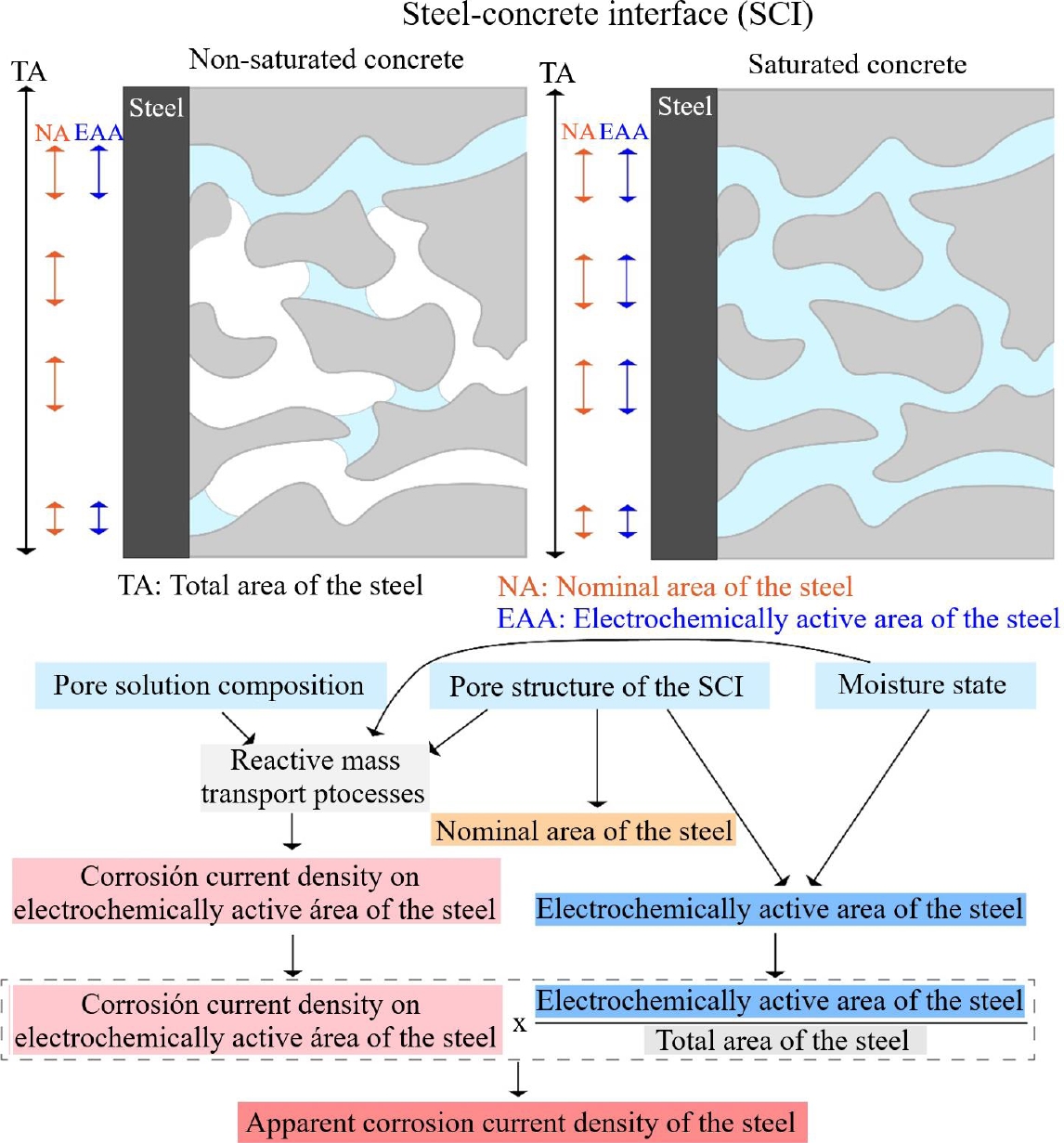
Figure 1. The steel-concrete interface and the role of the concrete pore solution, pore structure and moisture on the corrosion kinetics of steel in carbonated concrete. Adapted from (Stefanoni, Angst and Elsener, 2019).
2.1 The role of concrete pore solution
An electrochemical cell is established primarily by (i) an anodic reaction, such as the iron oxidation (Fe → Fe2+ + 2e−) and (ii) a cathodic reaction, in reinforced concrete most commonly the oxygen reduction (O2 + 2H2O + 4e− → 4OH−), which need to be connected by a metallic (e.g., rebar) and an ionic (e.g., pore solution) path. The composition of the concrete pore solution is critical to define the corrosion mechanism in the system and the kinetics of the reactions. For example, iron can passivate in alkaline conditions (e.g., pH >12), while the passive film can be locally destroyed in the presence of chlorides and lead to pitting corrosion of the metal. In the case of concrete carbonation and the decrease of the pore solution pH, the metal might depassivate and corrode uniformly, because the protective passive film is not thermodynamically stable in circumneutral pHs (Pourbaix, 1966). In that case, the corrosion rate depends on the pore solution composition.
First, the oxygen dissolved in the pore solution is generally not the limiting factor for the corrosion reaction kinetics (Stefanoni, Angst and Elsener, 2020). This is because carbonation-induced corrosion is most critical for structures exposed to wet-dry cycles, interchangeably favoring carbonation (and also oxygen ingress) in intermediate-dry environments; or steel corrosion in concretes with high moisture degree (M. Stefanoni, Angst and Elsener, 2018).
In terms of the ions present in the carbonated pore solution, atmospheric CO2 dissolves in the concrete pore solution, forming bicarbonate or carbonate ions (De Weerdt et al., 2019). Carbonate ions predominate in solutions with pHs above 10, in the initial stages of carbonation, while bicarbonate ions predominate at lower pHs, associated with advanced stages of carbonation. These ions are reported to have opposite roles depending on their respective concentrations in solution (Davies and Burstein, 1980; Huet et al., 2005, 2010; Gadala and Alfantazi, 2014; Martinelli-Orlando, Shi and Angst, 2020; Gao et al., 2022). Carbonate species might enhance the corrosion rate by forming complexes with iron ions and, thus, induce further dissolution of the metal (Martinelli-Orlando, Shi and Angst, 2020). Alternatively, carbonate species might, under some conditions, form siderite (FeCO3) on the metal surface and potentially decrease corrosion kinetics (Gadala and Alfantazi, 2014; Gao et al., 2022). Unpublished experiments with steel exposed to pH 8 buffered solutions show that the bicarbonate ions do not significantly change the corrosion rates of steel. Rather, these rates are relatively low, under 0.5 μA/cm2.
Upon carbonation, the calcium from the cement hydrates is consumed to form calcium carbonate, thus modifying the phase assemblage of the system (von Greve-Dierfeld et al., 2020). This process also releases chloride and sulfate ions previously contained in the cement hydrates, such as Friedel’s salts and ettringite (De Weerdt et al., 2019). Even at low concentrations in the pore solution, such as 10 mmol/L, these ions can also increase the corrosion rate of steel by 2 orders of magnitude (Albert et al., 2023). Unpublished work on steel immersed in pH 8 buffered solutions also indicates that bicarbonate ions might initially increase the corrosion resistance of steel, particularly in the presence of chlorides. Possibly, a poorly protective hydroxide layer might form on the steel surface and protect it from the chloride attack in initial stages (Gao et al., 2022). However, once this layer is locally destroyed, the corrosion rates may be even higher than in the absence of bicarbonates ions (Mao, Liu and Revie, 1994). The improvement of fundamental understanding of the effect of such ions in low pH conditions is critically needed for elucidating corrosion kinetics of steel in carbonated concrete.
We suggest that electrochemical experiments in benchtop setups, e.g. utilizing rotating disk electrode approaches, are well suited to specifically study the effect of pore solution composition under controlled conditions, in particular those related to the electrolyte composition at the metal surface. For instance, Figure 2 illustrates the mass-transfer controlled effect of bicarbonate ions on the anodic iron dissolution. This is apparent from the effect of the rotation speed on a cyclic voltammetry scan of steel immersed in a pH 8 buffered solution containing 10 mmol/L of NaHCO3. Higher rotation speeds reduce the thickness of the diffusion layer on the metal surface, thus increasing the availability of ionic species from the bulk solution to the metal, and therefore increasing the current density peaks in the voltammetry scans of Figure 2. Such experiments allow for the study of the effects of pore solution chemistry and availability of interfacial species dissolved in the pore solution on the corrosion kinetics under well-defined conditions.
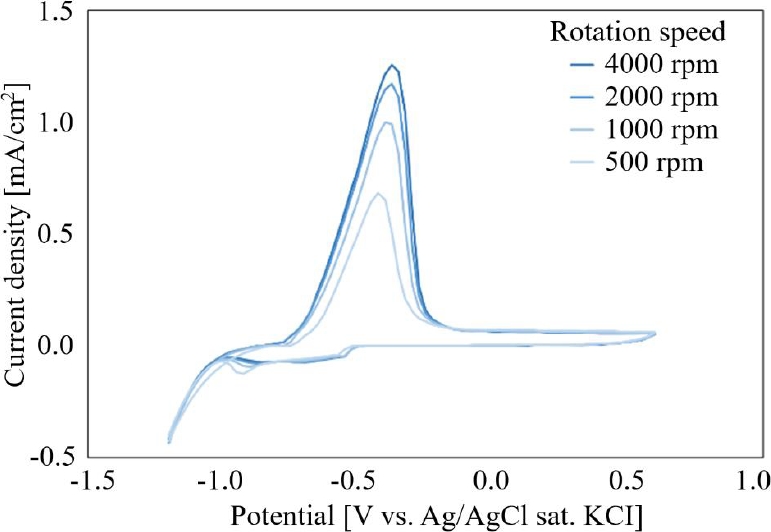
Figure 2. Cyclic voltammograms of steel immersed in 50 mMol Hepes + 10 mMol NaHCO3 solution under N2 bubbling, obtained with a rotating disk electrode setup in a range of rotation speeds.
The next step is to relate this fundamental knowledge on the effect of ions at the metal surface on corrosion kinetics to a practical context. More specifically, the pore solution composition of carbonated concretes produced with SCMs must be systematically determined. The available data in the literature is scarce and widely scattered, particularly for concretes with pozzolanic SCMs, as summarized in (Albert, Isgor and Angst, 2022) and shown in Figure 3 with the histogram of the range of pHs reported for the pore solution of carbonated concretes. The collection of this data remains a challenge since carbonated samples are kept typically dry (50-65% RH) to accelerate the CO2 ingress in concrete, which, on the other hand, limits the amount of pore solution that can be extracted by the traditional pore solution expression method.
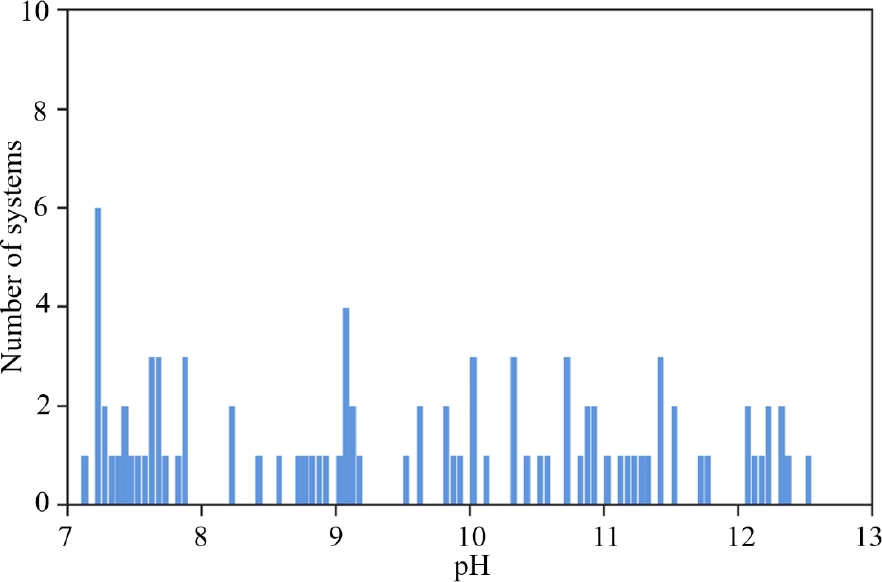
Figure 3. Histogram of the pore solution pHs reported in the literature for carbonated concrete with different degrees of carbonation, collected from 7 studies (Albert, Isgor and Angst, 2022).
However, we propose exploring alternative approaches for enhancing the state of the art on pore solution chemistry in carbonated concrete. This may include leaching methods or pore solution expression after resaturation of the pore system after carbonation of the matrix. The latter may be justified that corrosion rates of steel in such systems are only of practical relevance in concretes close to or at saturation. Nevertheless, establishing a reliable database of pore solution compositions of carbonated concrete containing SCMs remains an important research challenge, that we suggest to be prioritized by the research community.
2.2 The role of concrete pore structure
The second contributor to the complexity of steel corrosion in carbonated concrete is the pore structure of the cementitious matrix. In the corrosion initiation process, the bulk pore structure affects the rate of ingress of CO2 and other aggressive agents. On the other hand, during corrosion propagation, the pore structure at the SCI is the most important factor. At the microscale, the SCI is composed of solid cementitious phases, pores filled with air (O2), and pores partially or completely saturated with pore solution, as schematized in Figure 1. The maximum area of steel that can actively corrode corresponds to the region exposed to pore solution, since cementitious phases or dry pores do not offer an efficient medium for ion transport and the establishment of an electrochemical cell. Thus, the pore structure at the SCI defines the available areas of steel to corrode. Moreover, the pore structure in the interfacial region dominates reactive mass transport processes of iron and other aqueous species, which are processes that are inherently coupled to the electrochemical dissolution rate of the metal. This relatively new conceptual framework of understanding metal dissolution in porous media is explained in more detail in other publications (Matteo Stefanoni, Angst and Elsener, 2018; Stefanoni, Angst and Elsener, 2019).
For steel corrosion in carbonated concrete, this means that more porous concretes will also have a higher fraction of steel in contact with pores, which could eventually be filled with electrolyte and hold an electrochemical cell. It is well known that factors such as water/binder ratio and longer curing times contribute to the decrease of concrete porosity (Neville and Brooks, 2010; Mehta and Monteiro, 2014). Progress has also been made on addressing the effect of SCM on the pore structure of concrete (Lothenbach, Scrivener and Hooton, 2011; Berodier and Scrivener, 2015). However, the understanding of the pore structure of carbonated concretes produced with blended cements is still in progress (Shah and Bishnoi, 2018; von Greve-Dierfeld et al., 2020), however, the main focus is generally the bulk pore structure. The pore structure in the SCI is not the same as in the bulk concrete, due to a number of reasons, such as wall effects playing a role in the distribution of cement hydrates and leading to an increased porosity in the SCI (Horne, Richardson and Brydson, 2007; Angst et al., 2017). Thus, we strongly believe that more research efforts are needed to characterize, at the micro or nanoscale, the pore structure of the SCI in carbonated concretes produced with SCMs. Some promising approaches may include FIB-SEM nanotomography (Ruffray et al., 2023) and x-ray tomography (Wong et al., 2022), and we believe that progress in such technologies should be embraced in order to obtain the information needed about the microstructural features at the SCI relevant for corrosion of steel in carbonated concrete. An example of the SCI characterization by FIB-SEM nanotomography is shown in Figure 4, with the metal (left) facing the cementitious phases (gray) and pores (black).
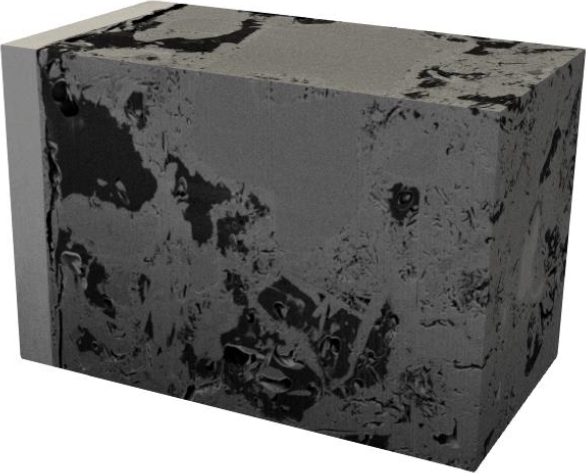
Figure 4. FIB-SEM nanotomography of the SCI pore structure (Ruffray et al., 2023).
In addition, the pore size distribution of concrete influences the moisture retention properties of concrete. When moisture ingresses concrete, more electrolyte is present in the pores in contact with the steel, increasing the electrochemically active area of the steel, as shown in Figure 1. This is known as the area effect (Matteo Stefanoni, Angst and Elsener, 2018; Stefanoni, Angst and Elsener, 2019). The pore structure of concrete is intertwined with the moisture content in the pores, as a function of RH, and this relationship is described by the sorption isotherms. The effect of moisture is further discussed in the next section.
2.3 The role of moisture
It is well known that the increase in the moisture state of concrete leads to higher corrosion rates of the steel reinforcement (M. Stefanoni, Angst and Elsener, 2018; Angst et al., 2020). Characterizing the moisture state at the SCI is critical to assess the electrochemically active area of steel in concrete. To achieve this purpose, it is necessary to first improve the understanding of the heterogeneous pore structure at the SCI. Furthermore, studies at equilibrium moisture conditions are essential to provide the fundamental basis for corrosion of steel in concrete and information on instantaneous corrosion rates of steel. Since carbonation-induced corrosion is critical for structures exposed to wet/dry cycles, the investigation of the moisture transport in concrete is an additional step to understand the transition between moisture states.
To answer these questions, advanced synchrotron methods such as multimodal imaging combining X-ray and neutron tomography can yield complementary information on the pore structure and water distribution at the SCI on a micrometer scale (Wong et al., 2022). While X-rays are sensitive to the cementitious phases, neutrons are sensitive to moisture, thus providing complementary information and allowing to estimate the presence of moisture inside air voids. Voids located at the SCI might contain an electrochemical cell, whose evolution could be accompanied by the presence of water and establishment of an electrochemically active area of the steel. Following the precipitation of corrosion products in such voids is highly interesting for corrosion propagation research. However, the resolution of current tomography methods does not provide information on the smaller capillary pores. This brings about open questions on the connectivity of capillary pores and air voids, influencing the moisture transport in the pore structure. For instance, this could lead to air voids fully saturated or partially saturated with entrapped air.
The detailed 3D characterization of the pore structure, including capillary pores, can be achieved by FIB-SEM nanotomography, with spatial resolution reaching tens of nm (Ruffray et al., 2023). However, only the pore structure can be monitored in this case, since the measurements are conducted under vacuum and the focused ion beam mills away layers of the sample at each measurement. By recombining this stack of images, the pore structure at the SCI can be reconstructed and visualized in 3D. Furthermore, the pore structure can also be digitally reproduced (Schmid et al., 2022) and employed on simulations of the moisture transport at the SCI (Malenica, Zhang and Angst, 2023) with realistic data.
Furthermore, the simultaneous application of imaging techniques sensitive to moisture, such as neutron imaging, and electrochemical techniques can provide significant insight in non-stationary coupled processes. It is the case of the moisture ingress in concrete and the electrochemical response of the steel. Zhang et al. (Zhang et al., 2022) observed that, as soon as the waterfront reached the level of steel in concrete, the corrosion potential of the steel dropped significantly, and the corrosion rate increased by 2 orders of magnitude. This highlights the importance of scientific studies addressing the dynamic and non-stationary behavior of steel in concrete during wetting and drying events.
2.4 Precipitation of corrosion products
Developing an understanding of the long-term propagation phase of corrosion is highly valuable, particularly with respect to the precipitation of corrosion products and the potential structural damage they may cause. Research mostly focused on the precipitation of iron hydroxides from Fe(III) supersaturated sources and their subsequent phase transformation processes at a range of pHs, such as Ref. (Schwertmann and Murad, 1983; Schwertmann, Stanjek and Becher, 2004; Furcas et al., 2023). The in-situ validation of these reactions for natural corrosion of iron is a highly challenging task as kinetic processes of iron dissolution, oxidation (Pham and Waite, 2008; Mundra et al., 2023), diffusion, precipitation, and phase transformation take place in the multi-scale pore space of the domain surrounding the steel. Several attempts have been made to analyze the formation and evolution of corrosion products at the SCI, by means of destructive tests, but the issues with the methodology of these studies have been highlighted thoroughly (Zhang et al., 2020), such as the oxidation of the iron hydroxides when exposed to air. Thus, to understand the evolution of iron hydroxides precipitating from corrosion reactions, the in-situ investigation of iron corrosion is critical. In this regard, open questions concern the type and distribution of corrosion products through the concrete pore structure, more specifically, the type of ferrous or ferric hydr(oxides) formed, their respective volumes, their precipitation close to the SCI or their mobility through the concrete pore structure, minimizing the exerted pressure on the concrete cover. Such work is currently underway by the authors (Albert et al., 2024).
3. CONCLUSION
New and fundamental understanding about corrosion and corrosion-related processes of steel in carbonated concrete is needed to enable reliable service life design for new, environmentally friendly cement types. The systematic investigation of steel corrosion in carbonated concrete as a function of the pore solution composition, pore structure and moisture can be combined to improve the mechanistic understanding of corrosion processes. These insights are necessary to refine models for corrosion propagation, and therefore, our ability to predict the service life of structures.
To achieve these goals, we see opportunities in embracing a range of experimental techniques, combining both traditional and novel approaches. For instance, controlled electrochemical experiments, e.g., employing rotating disk electrodes, are promising to elucidate the concrete pore solution effect on steel corrosion. Additionally, the investigation of the pore structure at the SCI and its moisture conditions is critical for defining the electrochemically active areas of the steel. Progress made in imaging techniques, such as multimodal neutron and X-ray tomography, FIB-SEM nanotomography, especially when combined with electrochemical measurements, offer significant potential for characterizing the processes occurring at the SCI. Furthermore, the corrosion products formed at the SCI and their phase transformation over time can be characterized with various techniques. Such knowledge is needed for modelling the advanced stages of corrosion propagation and its consequences on concrete cracking and spalling.
Based on new fundamental knowledge, the paradigm of avoiding concrete carbonation can - and needs to be - be shifted to a new paradigm focused on avoiding corrosion and corrosion related damage. For example, instead of considering the concrete cover depth as a defense against carbonation of concrete reaching the steel level, the cover depth can be rather seen as a protection against water ingress (Angst, 2023). Thus, maintaining concrete at a low moisture state can lead to low corrosion rates of steel even in carbonated concrete.
4. ACKNOWLEDGMENTS
The authors acknowledge Ola Berg Edseth for the experimental data reproduced in Figure 2, and Thilo Schmid for the SCI pore structure reproduced in Figure 4.
5. REFERENCES
Albert, C., Mundra, S., Burkan Isgor, O., Angst, U. (2023), Corrosion Kinetics of Steel in Carbonated Pore Solutions Containing Chlorides and Sulphates. In: Jędrzejewska, A., Kanavaris, F., Azenha, M., Benboudjema, F., Schlicke, D. (eds) International RILEM Conference on Synergising Expertise towards Sustainability and Robustness of Cement-based Materials and Concrete Structures. SynerCrete 2023. RILEM Bookseries, vol 44. Springer, Cham. https://doi.org/10.1007/978-3-031-33187-9_97
Albert, C., Isgor, B., and Angst, U. (2022), “Literature-based data on pore solution compositions of cementitious systems”. ETH repository. Available at: https://doi.org/10.3929/ethz-b-000543461
Albert, C. C., Mundra, S., Sanchez, D. F., Furcas, F. E., Rajyaguru, A. D., Isgor, O. B., Grolimund, D., Angst, U. M. (2024), Microscale chemical imaging to characterize and quantify corrosion processes at the metal-electrolyte interface. Materials Science, https://doi.org/10.48550/arXiv.2408.02327
Angst, U., Moro, F., Geiker, M., Kessler, S., Beushausen, H., Andrade, C., Lahdensivu, J., Köliö, A., Imamoto, K.- ichi, von Greve-Dierfeld, S., Serdar, M. (2020), “Corrosion of steel in carbonated concrete: Mechanisms, practical experience, and research priorities - A critical review by RILEM TC 281-CCC”, RILEM Technical Letters, 5, pp. 85-100. https://doi.org/10.21809/rilemtechlett.2020.127
Angst, U. M., Geiker, M. R., Michel, A., Gehlen, C., Wong, H., Isgor, O. B., Elsener, B., Hansson, C. M., François, R., Hornbostel, K., Polder, R., Alonso, M. C., Sanchez, M., Correia, M. J., Criado, M., Sagüés, A., Buenfeld, N. (2017), ‘The steel-concrete interface’, Materials and Structures, 50(143), pp. 1-24. https://doi.org/10.1617/s11527-017-1010-1
Ueli, M. A. (2023), Steel corrosion in concrete - Achilles' heel for sustainable concrete?, Cement and Concrete Research, Volume 172, 107239, ISSN 0008-8846, https://doi.org/10.1016/j.cemconres.2023.107239
Berodier, E., Scrivener, K. (2015), Evolution of pore structure in blended systems, Cement and Concrete Research, Volume 73, Pages 25-35, ISSN 0008-8846, https://doi.org/10.1016/j.cemconres.2015.02.025.
Davies, D. H., Burstein, G. T. (1980), “Effects of Bicarbonate on the Corrosion and Passivation of Iron.”, Corrosion (The Journal of Science & Engineering), 36 (8), pp. 416-422. https://doi.org/10.5006/0010-9312-36.8.416.
Furcas, F. E., Lothenbach, B., Mundra, S., Borca, C. N., Albert, C. C., Isgor, O. B., Huthwelker, T., Angst, U. M. (2023), Transformation of 2-Line Ferrihydrite to Goethite at Alkaline pH. Environmental science & technology, 57(42), 16097-16108. https://doi.org/10.1021/acs.est.3c05260
Gadala, I. M., Alfantazi, A. (2014), ‘Electrochemical behavior of API-X100 pipeline steel in NS4, near-neutral, and mildly alkaline pH simulated soil solutions’, Corrosion Science, 82, pp. 45-57. https://doi.org/10.1016/j.corsci.2013.12.020
Gao, M., Wang, H., Song, Y., Han, E.-H. (2022), Corrosion behavior on carbon steel in a simulated soil solution under the interaction effect of chloride and bicarbonate ions, Journal of Materials Research and Technology, Volume 21, Pages 3014-3024, ISSN 2238-7854, https://doi.org/10.1016/j.jmrt.2022.10.133.
von Greve-Dierfeld, S., Lothenbach, B., Vollpracht, A. et al. (2020), Understanding the carbonation of concrete with supplementary cementitious materials: a critical review by RILEM TC 281-CCC. Materials and Structures, 53, 136. https://doi.org/10.1617/s11527-020-01558-w
Horne, A. T., Richardson, I. G., Brydson, R. M. D. (2007), Quantitative analysis of the microstructure of interfaces in steel reinforced concrete, Cement and Concrete Research, Volume 37, Issue 12, Pages 1613-1623, ISSN 0008-8846, https://doi.org/10.1016/j.cemconres.2007.08.026
Huet, B., L’Hostis, V., Miserque, F., Idrissi, H. (2005), Electrochemical behavior of mild steel in concrete: Influence of pH and carbonate content of concrete pore solution, Electrochimica Acta, Volume 51, Issue 1, Pages 172-180, ISSN 0013-4686, https://doi.org/10.1016/j.electacta.2005.04.014.
Huet, B., L'Hostis, V., Tricheux, L., Idrissi, H. (2010), ‘Influence of alkali, silicate, and sulfate content of carbonated concrete pore solution on mild steel corrosion behavior’, Materials and Corrosion, 61(2), pp. 111-124. Available at: https://doi.org/10.1002/maco.200905244.
Lothenbach, B., Scrivener, K., Hooton, R.D. (2011), Supplementary cementitious materials, Cement and Concrete Research, Volume 41, Issue 12, Pages 1244-1256, ISSN 0008-8846, https://doi.org/10.1016/j.cemconres.2010.12.001.
Malenica, L., Zhang, Z., and Angst, U. (2023), ‘Direct numerical modelling of multiphase flow through reinforced porous media’, InterPore2023: Book of Abstracts. Amsterdam: InterPore, pp. 194-195.
Mao, X., Liu, X., and Revie, R.W. (1994), ‘Pitting corrosion of pipeline steel in dilute bicarbonate solution with chloride ions’, Corrosion, 50(9), pp. 651-657. https://doi.org/10.5006/1.3293540.
Martinelli-Orlando, F., Shi, W., and Angst, U. (2020), ‘Corrosion Behavior of Carbon Steel in Alkaline, Deaerated Solutions: Influence of Carbonate Ions’, Journal of The Electrochemical Society, 167(6), p. 061503. https://doi.org/10.1149/1945-7111/ab7d44.
Mehta, P. K., Monteiro, P. J. M. (2014), “Concrete: Microstructure, Properties, and Materials”, Fourth Edition. ISBN: 9780071797870, Publication Date & Copyright: 2014 McGraw-Hill Education
Mundra, S., Tits, J., Wieland, E., Angst, U. M. (2023), Aerobic and anaerobic oxidation of ferrous ions in near-neutral solutions, Chemosphere, Volume 335, 138955, ISSN 0045-6535, https://doi.org/10.1016/j.chemosphere.2023.138955.
Nations, U. (no date), Sustainable development goals. Available at: https://www.un.org/sustainabledevelopment/climate-change.
Neville, A. M., Brooks, J. J. (2010), Concrete Technology. 2nd Edition, Pearson Education Ltd., London.
Pham, A. N., Waite, T. D. (2008), Oxygenation of Fe(II) in natural waters revisited: Kinetic modeling approaches, rate constant estimation and the importance of various reaction pathways, Geochimica et Cosmochimica Acta, Volume 72, Issue 15, Pages 3616-3630, ISSN 0016-7037, https://doi.org/10.1016/j.gca.2008.05.032.
Pourbaix, M. (1966), Atlas of electrochemical equilibria in aqueous solutions, NACE International Cebelcor.
Ruffray, N., Angst, U. M., Schmid, T., Zhang, Z., Isgor, O. B. (2023), ‘Three-dimensional characterization of the steel-concrete interface by FIB-SEM nanotomography’. Condensed Matter, Materials Science, https://doi.org/10.48550/arXiv.2310.04322
Schmid, T., Zhang, Z., Ruffray, N., Griffa, M., Isgor, O. B., Angst, U. (2022), ‘Toward a digital twin of the steel-concrete interface for numerical corrosion studies’, in 2022 Book of Extended Abstracts. 6th International Conference on Concrete Repair, Rehabilitation and Retrofitting (ICCRRR 2022), Cape Town: s.n., pp. 68-69.
Schwertmann, U., Murad, E. (1983), ‘Effect of pH on the formation of goethite and hematite from ferrihydrite.’, Clays & Clay Minerals, 31(4), pp. 277-284. https://doi.org/10.1346/CCMN.1983.0310405
Schwertmann, U., Stanjek, H., Becher, H.-H. (2004), ‘Long-term in vitro transformation of 2-line ferrihydrite to goethite/hematite at 4, 10, 15 and 25°C’, Clay Minerals, 39(4), pp. 433-438. https://doi.org/10.1180/0009855043940145
Shah, V., Bishnoi, S. (2018), ‘Analysis of Pore Structure Characteristics of Carbonated Low-Clinker Cements’, Transport in Porous Media, 124(3), pp. 861-881. https://doi.org/10.1007/s11242-018-1101-7
Stefanoni, M., Angst, U., Elsener, B. (2018), ‘Corrosion rate of carbon steel in carbonated concrete - A critical review’, Cement and Concrete Research, 103(June), pp. 35-48. https://doi.org/10.1016/j.cemconres.2017.10.007
Stefanoni, M., Angst, U., Elsener, B. (2020), The mechanism controlling corrosion of steel in carbonated cementitious materials in wetting and drying exposure, Cement and Concrete Composites, 113(June), p. 103717. https://doi.org/10.1016/j.cemconcomp.2020.103717
Stefanoni, M., Angst, U. M., Elsener, B. (2018), Electrochemistry and capillary condensation theory reveal the mechanism of corrosion in dense porous media, Scientific Reports, 8(1), pp. 1-10. https://doi.org/10.1038/s41598-018-25794-x.
Stefanoni, M., Angst, U. M., Elsener, B. (2019), Kinetics of electrochemical dissolution of metals in porous media, Nature Materials, 18 (9), pp. 942-947, https://doi.org/10.1038/s41563-019-0439-8.
De Weerdt, K., Plusquellec, G., Belda Revert, A., Geiker, M.R., Lothenbach, B. (2019), Effect of carbonation on the pore solution of mortar, Cement and Concrete Research, Volume 118, Pages 38-56, ISSN 0008-8846, https://doi.org/10.1016/j.cemconres.2019.02.004.
Wong, H. S., Angst, U. M., Geiker, M. R., Isgor, O. B., Elsener, B., Michel, A., Alonso, M. C., Correia, M., Pacheco, J., Gulikers, J., Zhao, Y., Criado, M., Raupach, M., Sørensen, H., François, R., Mundra, S., Rasol, M., Polder, R. (2022), ‘Methods for characterising the steel-concrete interface to enhance understanding of reinforcement corrosion: a critical review by RILEM TC 262-SCI’, Materials and Structures,0 55(4). https://doi.org/10.1617/s11527-022-01961-5.
Zhang, Z., Shakoorioskooie, M., Griffa, M., Lura, P., Angst, U. (2020), A laboratory investigation of cutting damage to the steel-concrete interface, Cement and Concrete Research, Volume 138, 106229, ISSN 0008-8846, https://doi.org/10.1016/j.cemconres.2020.106229.
Zhang, Z., Trtik, P., Ren, F., Schmid, T., Dreimol, C. H., Angst, U. (2022), Dynamic effect of water penetration on steel corrosion in carbonated mortar: A neutron imaging, electrochemical, and modeling study, CEMENT, Volume 9, 100043, ISSN 2666-5492, https://doi.org/10.1016/j.cement.2022.100043.